THE FACEBOOK FACADE

Is inaccurate self-representation affecting our perception of realistic success? This is a question I’ve been asking myself. The catalyst: Facebook.

Recently I’ve been in multiple conversations with friends about the power of Facebook, and how the impact it has on our lives is not always a positive thing. Given that I found myself continually drawn to this topic I thought it best to write it out.

Let me begin by saying I think Facebook is an incredible tool. The ability to maintain contacts and friendships, to share elements of our lives with the people we care about, to create a virtual gathering place where I can see pictures of my new niece or reconnect with old friends is astounding. And already it is evolving.

The addition of the share feature is transforming the way I use Facebook. Now the virtual gathering place is also a place to share ideas, to read articles and discuss them, to bring awareness to people who might be interested in various activities and organisations. Our discovery of new concepts and thoughts has sped up, and each time I check my newsfeed I can find something new to interest me. Even better, I choose whose shared articles and videos populate my newsfeed, meaning I tailor it to the opinions of those I care about.

This selective nature of Facebook allows me to eliminate the offensive or uninteresting elements I might find on more traditional sources of news. My newsfeed is exactly that: The news I choose to feed myself. But this option of an edited worldview cuts both ways, because it is still being driven by people with an ulterior motive.

Most of the time the motive of my friends and family is simply to display things of interest and joy. But inherently this creates the illusion that things are all interest and joy, and it extends, not only to what they share about other topics, but also what they share about themselves. The power behind Facebook and the profiles we create about ourselves is the ability to project whatever image we like, regardless of accuracy.

The best example of this I can think of is the checking-in option. I presume this option was made available to share with the people in our life exactly where we are and what we’re doing, although why this information is necessary to share with all contacts at once has escaped me. But this in itself is no bad thing. The problem arises when people become desperate to convince the world of their thriving social life. They advertise themselves as fun-loving party animals because there is the expectation that this is what they should be. That this lifestyle equals success. And, sadly, like most advertisements, it is riddled with half-truths.

We can’t all be fun-loving party animals, and we can’t be fun-loving party animals all the time. We have lives that need maintenance, jobs to fund our social outings, we get exhausted, and need down time. But when we indulge in this downtime, curl up on the couch with a laptop and peruse our newsfeed, we discover everybody else is out having a good time. We find photos of parties and holidays, checked-in locations of clubs and pubs we didn’t even know existed, and people tagged so everyone knows they partook in the good time.

If I was to believe my newsfeed I would have to concede that the lives of the people I know are nothing but restaurants and nights out, vacations and parties. And I would face the morbid realisation that my life is nothing like that.

And this is where the negative influence of all these good intentions can hit. People see the staggering weight of positive experiences and believe this is what life should be. They get depressed that their life is not composed of an endless string of ups, and feel pathetic and boring by comparison. And what do they do? They make sure the next time they’re out they check themselves in. They proliferate the illusion that happiness and success is determined by the quality of their social life in an attempt to convince people that they’re keeping up. And the irony is everyone else is doing the same. Everyone is logging on, seeing the revelry the rest of the world is having, then convincing themselves and others they’re part of it, thereby perpetuating a misconstrued reality.

This desire to keep up spreads into what photos we share, our upbeat statuses, and the things we like. Every time we add a stroke to our Facebook profile we make sure it represents the ideal us. We wait to see the amount of likes our input gets, using it as a barometer of popularity and a comfort that we are measuring up. We define our self-worth by the clicks of a mouse.

This one-sided persona we are all creating is damaging because it’s one that’s impossible to live up to. It is breeding a necessity to continually tag and check and share to maintain our disguise, but it’s artificial. Yes, we have times of genuine fun, but by feeding this and focusing solely on this we are ignoring half of ourselves. We need to embrace the quieter moments and place as much value on introspection and rehabilitation as we currently are on externalisation and socialisation.

I don’t know how we achieve this through the medium of social networking, and I’m not suggestion the solution is to broadcast when we feel shitty and anti-social, or upload photos of ourselves binge-eating on the couch watching crappy television. Although, perhaps if we did, we would realise a lot more of us do it than we care to admit.

But I do think that if we absolutely must advertise our lives then one day it would be nice to see a newsfeed populated with people checking in the current book they’re reading, status updates comprised of self-reflective thought, or photos of quiet nights in. I think this would go a long way towards bringing the balance back to Facebook, and a balance to our expectations of a normal life.
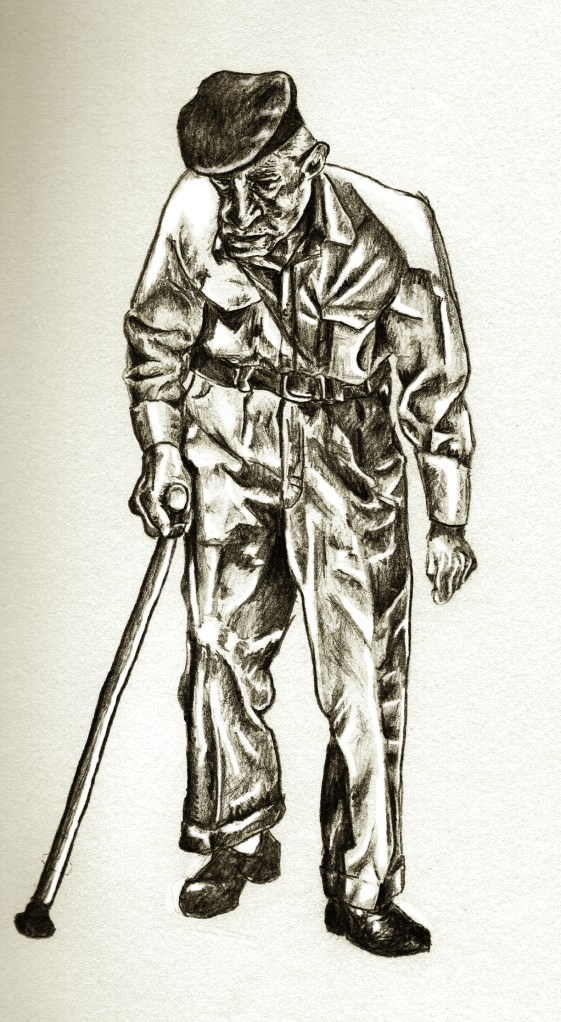
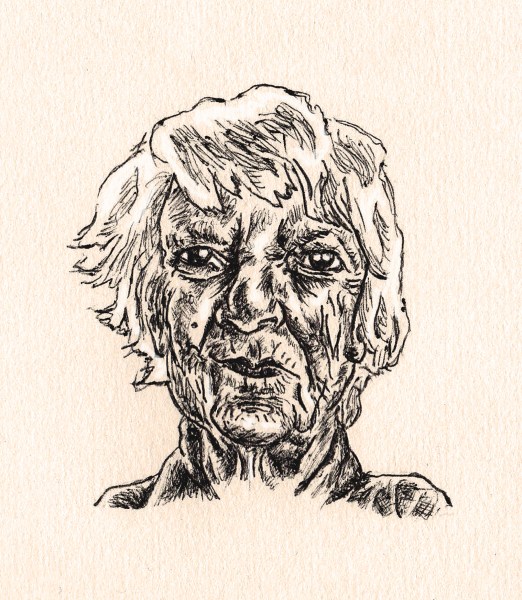
SNAPSHOT #02

I waited five minutes at his door, squinting at the sun, and listening to him shuffling inside. When he answered he was dressed in a jacket, shirt, and slacks. He had a smile for me and I followed him through his shadow-draped house to the kitchen, my steps tight and small behind his careful, walking-stick-assisted gait. I cleared a space on his cluttered table and he sat opposite me, sighing out his weariness from the trek.

I asked about old times and his face lost years as he told me. Eventually, his words wound down, and he said:

“I made pizza for twenty-seven years. But the stroke put an end to everything.”

He clutched his cane, a heave puffing from his chest as he stood and hobbled to the sink. He filled a glass, his eyes on the swirl of water.

“But we keep going.”

EXTRACTION

For those regular readers of my site, you may have noticed my posts have been a bit more sporadic of late. Some of you have been vocal in this, curious as to what I’ve been working on. Some have physically abused me, demanding more  and more words to satisfy them.

As I appreciate this feedback and unique show of support, I thought I’d placate these avid fans by assuring you all that more words are being typed every day, they’re just being done in the form of a novel. Two novels, in fact.

As I work full-time as a district nurse (have I mentioned that in the past?), it’s usually in my half-hour lunch break that I sit down and tap out the words bottled inside my head. Unfortunately, this being only a limited slice of time, and given that by the end of the working day I’m mostly used up and wrung out to the point that just preparing a healthy dinner is an accomplishment worthy of the highest praise, it makes writing anything of length a timely process.

But I appreciate every bit of encouragement I get from readers, so to reward your patience I thought I’d offer an extract from one of my novels-in-progress, I’ll Take it From Here. It’s the opening piece of the novel so you can’t get lost.

It can be found in the Writing link on this site, or simply by clicking here.

SNAPSHOT #01

The two of us sat at her round wooden table, a young man and an elderly Italian woman, and she told me about her husband, a man she was married to for fifty-three years, and who had died nine years ago. Between sentences she slipped individual pills between her lips, sipped at a glass of water, then continue detailing the attributes of her happy marriage. Her husband’s black and white face grinned at us from a framed photo on the wall, and her eyes latched to the image as she spoke, a small sad smirk to her mouth.

I pulled her heavy medical folder in front of me and she fell quiet as I wrote about the care I had administrated that day. From the silence she said this quote, nodding at the folder, and I was pleasantly surprised by the accuracy of her observation.

“The story of my life is getting longer.”

SINGULARITY IN WRITING

One of the things that fascinates me about the act of writing is how every time I tap at the keyboard I create something that is entirely unique than if I had written it the day before. Let me explain:

When I sit to write I have an idea of what I want to say, what will happen, but the words I use to describe a scene I make up as I go along. The very sentence I just wrote and the one I’m writing now I am piecing together as I feel necessary, like laying tracks in front of the moving toy-train that is the point I’m trying to make. The particular string of words is unformed until the moment I write them. This means that if I was to write a scene today, or delay until tomorrow, the two pieces of writing would be entirely different. Maybe the core of the pieces would mirror one another, but the exact landscape of the words would be unique. The examples I use, the similes, the dialogue, and the descriptions would all depend on the mood I was in while writing, the things I had seen recently that were still fresh in that outermost layer of my consciousness, ready to be taken and applied where appropriate.

Maybe on Day A I saw a client with a tabby cat that lounged at his feet, overweight and unperturbed by the prodding of my client’s toes under the table. Maybe I wasn’t even focused on the cat during the visit, but a small part of my mind noticed and found it amusing, and filed it away. Then when I sat to write later that day, and I want to make the backdrop of a scene more interesting, I add a tabby cat, overweight and lazy.

But say instead I delayed to write the same scene until Day B, but by this point the cat has been forgotten. So to give interest to the environment I include some detail about horrid wallpaper, taken from a memory of wallpaper that used to coat my own bedroom.

Both scenes are painted differently, giving a different flavour depending on what came to mind in the moment of writing. The outset was shared, but simply by where my consciousness was at that point in time, two individual pieces would be created.

I love this principle. I love that no matter what I’m writing it is singular to that day and that environment and that frame of mind. Even the words I just wrote, the use of the word “singular” – perhaps tomorrow if I sat to write this piece the word singular would never appear in my head. The example of the cat may never have occurred to me. Maybe I never would have worked the piece around to detailing an example, instead I could have gotten lost on some tangent, changing the point of the piece altogether.

Why do I love it? Because it means there’s no right way to write a piece. There is no ideal phrasing or perfect sentence; it’s just whatever happens to happen that day. Each patchwork of words is a representation of the specific date and time, and the more diverse because of it.

It also means that the options for creating unique pieces of writing are limitless. Every time I crack open my laptop I am a different person with a different set of thoughts, making each act of creativity a new one.

But what I love most about this theory is that it can be applied to more than just writing. Living each day can be, and is, done in the same fashion. Think about the correlations. Each time you wake you are writing the story of that day. The thoughts you have and the things you say are entirely different from the day before. Now, maybe you’re thinking that your days are repetitive. That each day is not unique. You are wrong.

Even if you leave the house at the same time, arrive at the office at the same time, and head home at the same time, every moment in between is that moment, completely new and original than any other moment in your life. And by realising this you have the ability to write your day any way you like.

You can add excitement to dialogue by saying the joke that comes to mind that your normally keep to yourself. The moment is new; try the joke and see what happens.

You can add new characters by deciding at the start of the day to engage in conversation with that work colleague you don’t really know and have hardly spoken to before. Talk to them, and see where the scene goes.

You can add a tangent in your day by not getting home and falling into the same routine. Go for a walk. Go to the movies. Phone someone you haven’t seen in years. Go swimming. Do anything: the moment is unique, and yours to make of it what you will. There is no wrong way to write it.

And in the same way a writer would write a scene to add excitement, and tension, creative descriptions and intriguing characters, you can write your day in the same way. Don’t just settle for a drab and repetitive diary entry, write your day as if it were a short story you couldn’t put down, filled with plot twists and humour, adventure and reflection.

Each day is a new one, a new collection of words to string together, and an opportunity to write something perfectly singular.