Vienna in the time of COVID – Chapter 12

For those of you who may be unaware, my wife is Austrian, and therefore part of the contractual obligation to dating and ultimately marrying her was that I learn German. This prospect was initially exciting as it meant I had a valid reason to learn a second language I would actually use (apparently saying “kop-khun-krub” to the hotel staff in Thailand doesn’t count).

What I didn’t realise and therefore didn’t factor into the whole equation was how much having a strong grasp of a language empowers a person in their daily life. When it comes to English, it’s not going too far to say that I have a passing competence in its use and don’t really give a second thought to composing emails, phoning a stranger, or writing long-winded blogs about my life. 

But learning German snatched me right back to the start and suddenly, at thirty, I was having to learn everything again. This is no easy thing. Having to stand in a bakery and ask your wife to order you the donut like a kid having a day out with Mum is a humbling thing. I have been guilty of listening to our four year old nephew, Lorenz, going on about his favourite TV show and feeling flush with jealousy at his proficient German skills. I have sat and read children’s books with Lorenz and been suffused with pride that I could read the whole book. A book aimed at four year olds. Trust me, friends, learning a language will keep you modest. 

But, given that I chose to move to this country where the native tongue is German, learn I must. And given that I now find myself locked indoors with my wife who has nowhere to run when I ask her questions about German semantics, what better time is there to continue to build my language skills. And, lastly, as teaching what you’ve learnt is an excellent way to consolidate information, and given that you’re also locked in your homes and have nowhere to run, I thought I’d teach you all some German nouns to occupy your minds until the world turns back on again. You lucky, lucky things.
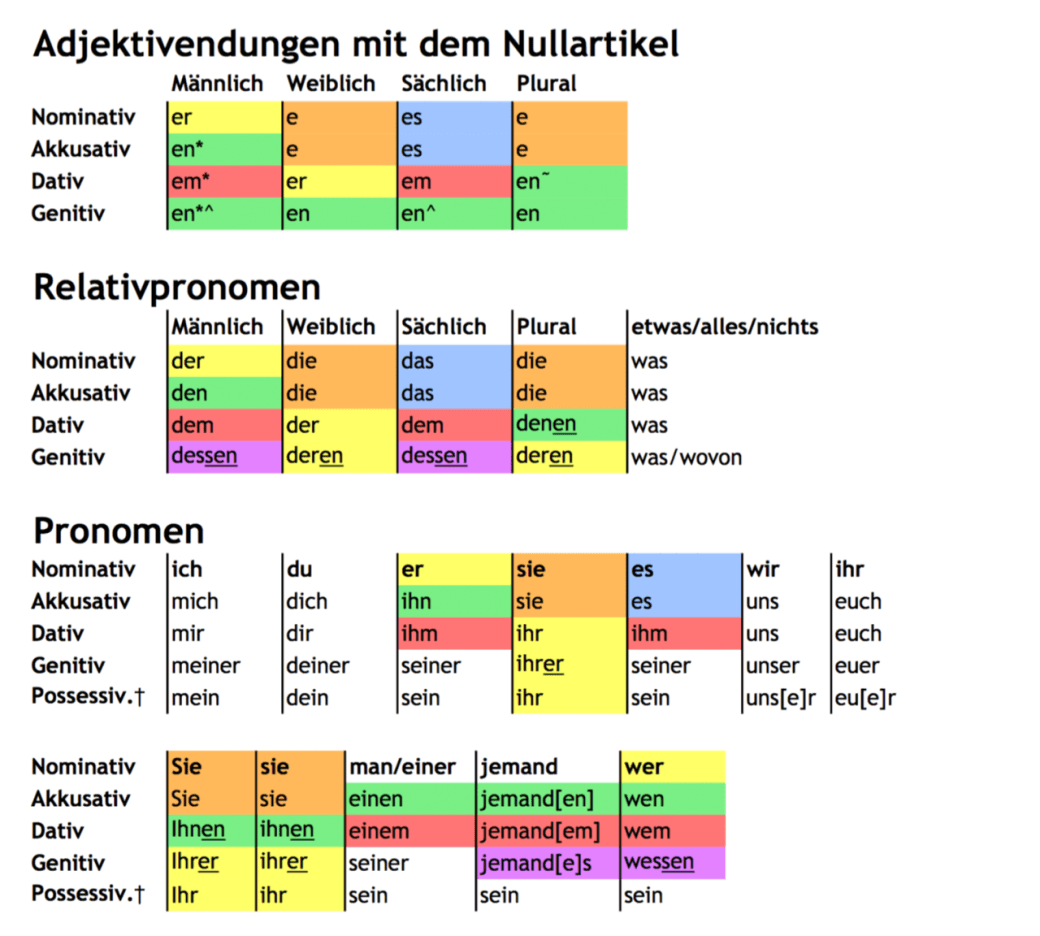
German

One of the first things you’ll notice is that German is a very literal language. As a novice, this facet is advantageous as the mental connections required to actually get a word to stick to the inside of your brain are already there. Let me give you an example to show what I mean. 

Say you’re an Australian visiting Austria in the winter and you discover that winter in Austria is rather cold, which is to say extremely bloody cold to an Australian to whom winter usually means wearing a jumper with the sleeves rolled down. You realise as you wander through a Christmas market that you are putting yourself at serious risk of frostbite and so set out to buy some appropriate accessories. You wish to let the shop assistant know you would like to purchase some gloves but can’t remember the German word. You can work through the following association exercise to quickly and easily arrive at the right word:

“Gloves. What are they really? Why nothing more than shoes one wears on one’s hands. In essence, they are just a pair of hand shoes.”
Gloves = hand shoes = Handschuhe.

Created with GIMP

Now, say you are a Franz Joseph and Sissi nut (who isn’t, am I right?) and you are keen to see Sissi’s zoo. You arrive at the Vienna zoo and are suddenly exposed to an assortment of animals which you need to identify using only the German names. A daunting task, no doubt, but armed with the word for animal, “Tier”, German has you covered. Just walk through these logical and natural steps and you’ll soon find yourself speaking like a native.

“The sloth. It’s barely moving. My god, they are lazy, aren’t they? I heard they only come down out of their trees once a week to poop and they can lose a third of their body weight when they do finally defecate. Nothing more than just a lazy, lazy animal.”
Sloth = lazy animal = Faultier.
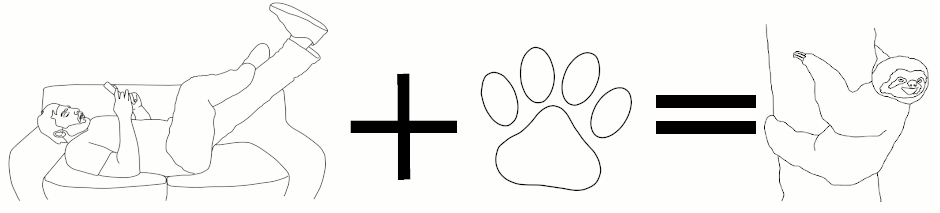
Faultier

“No way, the platypus. Cute little thing. Mad to think that it’s a mammal with a beak. Yep, that beak is a key distinctive feature of the platypus. It’s like some sort of beak animal.”
Platypus = beak animal =
Schnabeltier.
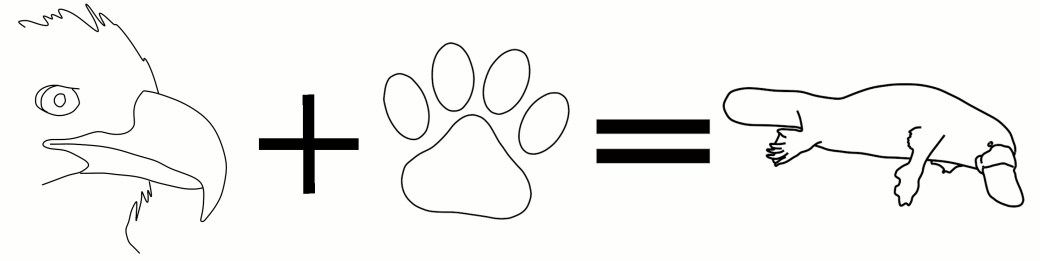
Created with GIMP

“Check out the hippopotamus. Boy, are they big. Anyone else get the urge to ride them? Just saddle up and swim off into the horizon? I’ve always said they’re basically a horse. But, like, one that lives in the river. You know, like a river horse.”
Hippopotamus = river horse = Flusspferd. 

Flusspferd

Next, maybe, you venture into the mountains for a hike and while doing so discover the ancient remains of a hiker. You call the police and are trying to explain that you found the corpse when tripping over the skull, only, and hasn’t this happened to us all, you can’t remember the word for skull! Not a worry, just put one logical foot in front of the other and you’ll soon be arriving at the correct answer.
“Ooh, it’s like a head. Only a creepy head. One that is, like, proper dead. Like a creepy dead head.”
Skull = dead head = Totenkopf.
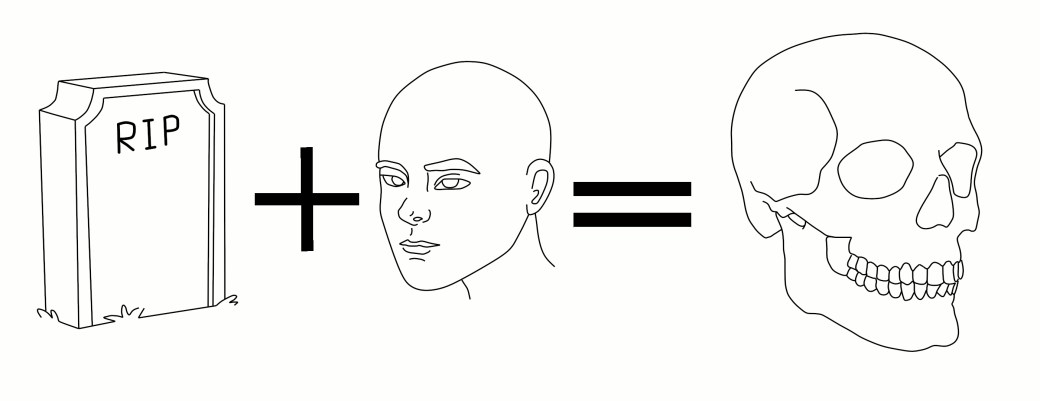
Totenkopf

Lastly, let’s pretend you’ve had a lovely night out on the town and finished it off by getting seduced by a local (it happens, trust me. They’re very seductive, these Austrians. They invite you over to their country and the next thing you know you’re married to one of them). The next morning you realise that in your passion you failed to use any contraceptive products. You find the nearest Apotheke (pharmacy) and need to ask the pharmacist for the morning after pill. But what’s the word? Easy, just think to yourself:
“Anti-baby pills”. And that’s it. This one’s pretty self-explanatory.
Antibabypillen = anti baby pills = the morning after pill.
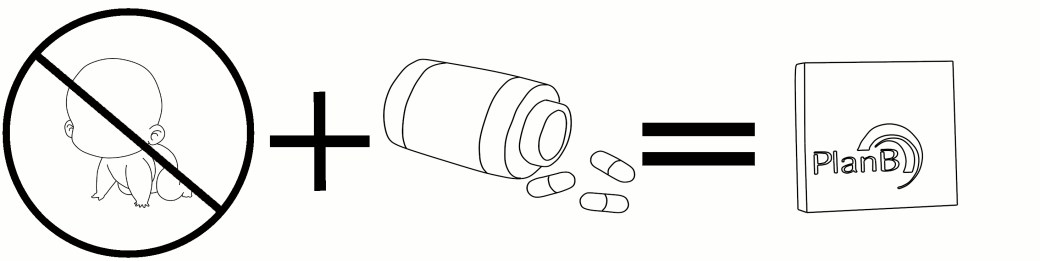
Antibabypillen

It is no small thing taking on the learning of a new language and it requires accepting that you have to leave your ego at the door and look foolish from time to time. But through creating associations and using the literal nature of the German language to your advantage, soon you too could be talking as fluent as a four year old. 

You’re stuck indoors, what else are you gonna do?

Tomorrow: Cuisine.

Vienna in the time of COVID – Chapter 11

I realised that in my post about media, and more specifically the part discussing good media, I left out an important facet of this genre: Music.

I, like 99.8% of the population, enjoy music of one kind or another (I think the 0.2% is made up of people who were born deaf and sociopaths). Music is an outlet, a way of tapping the pressure valve and letting out some of the steam. And so in a time when the whole world seems tight with pressure and ready to burst, a bit of an outlet is no bad thing.

I generally listen to folk music about sad things and introspection that I think is beautiful and my wife finds depressing. She is more into upbeat music that puts a tap in her toes and a wiggle in her butt. While I greatly appreciate a good tapping toe or wiggling butt, particularly when the butt in question is my wife’s, I find that what really leaves me in a better state of mind is a song that is synchronised to some inner sadness, music that resonates with something that’s troubling me and by doing so, by being able to say “hey, yeah, that’s what it feels like”, I’m able to leave some of it with the music and walk away feeling lighter, with a spring in my step and a wiggle in my butt. 

A few people have made the point that now that everyone has some time on their hands, it is the perfect opportunity to learn an instrument. I play the guitar and I wholeheartedly endorse this statement. Playing an instrument for me is a form of meditation. My brain becomes so engrossed in the mechanics of it and the mental concentration that everything else just sort of falls away. And when the music spills out and I know that it’s my hands making it, it’s a wonderful thing. 

It is not always a wonderful thing for Alex, however, who has now heard the rotation of my six favourite songs so many times that sometimes her eyes dart between my head and my instrument in a way that makes me wonder if she’s planning to introduce the two in a more intimate fashion. She was kind enough to gift me the guitar, so really, a certain amount of the blame rests with her. 

IMG_20200331_182105

Obviously, the ability to learn an instrument depends on what instruments you have at your disposal during your lockdown. Guitars and pianos are always good, and a violin played well is an uplifting thing. If, however, all you have at your fingertips is a recorder, the instrument of choice for primary school kids because whoever set the musical curriculum is an agent of evil here to make people suffer, then I’d probably recommend you leave it to the professionals. That’s not to say that with time and practice a recorder isn’t capable of making beautiful music, only that you will never get to that point as the housemate you’re socially isolating with will stuff the recorder down your throat long before you develop any sort of proficiency. Or whichever orifice of their choice.

One of my favourite musicians, a Bristol-born gentleman who performs under the name of Passenger, has seen fit during this span of dislocation to reach out from his own hideaway and provide anyone who is interested with a living-room concert. Given that all forms of live entertainment are currently under lock and key, being able to engage with an artist and enjoy their skill, to close your eyes and let go of some pressure, is a beautiful thing. He has been performing live for the last two Sundays, and is kind enough to put the recording up on YouTube for those who missed it.

As it is just him in his home and not a team putting together a production, the intimacy of the performance is ramped up. There are hiccups in the video where the wifi struggles, which I find charming as it really captures a facet of this time and this moment. In the future when the internet will be as stable and steady as any other utility and we’ll download movies just by thinking of them, kids will not understand the concept of lag, much as kids today don’t understand the pops and whistles of a record, or the concept of a record for that matter. 

But to me, this just adds to the authenticity and earnestness of the performance. This is no big-budget arena, just a man stuck in his living room like the rest of us, reaching out through the tools he has, a guitar, a laptop, and a low-speed internet connection, to try and infuse a little happiness and warmth into our isolation. 

Despite the limitations, his voice and guitar comes through pure and clear, singing his melancholy songs in a way that reverberates with me. And as an added bonus, he’s also quite funny, so you get a bit of comedy thrown in if the music isn’t enough of a draw.

Give it a listen, if it’s not your thing, or it doesn’t touch you, then that’s okay, it just means you’re dead inside and have the emotional range of a potato.

Whatever genre of music you like, be it k-pop or Norwegian death metal, I recommend turning up the volume, releasing some pressure, and of course, wiggling that butt.

Tomorrow: Language.

Vienna in the time of COVID – Chapter 10

Weekend number two of social distancing has been successfully survived, I haven’t had to lock the forks away out of my wife’s reach yet, and we’re starting the working week with a stash of stolen goods sure to do wonders for our posture. So far, week three of the COVID limbo is looking good.

We even managed to get out of the apartment and mingle with our community over the weekend, which did our socially-starved minds some good. I say mingle, I of course mean avoided at all costs and ran in the other direction if anyone looked like they were making a beeline for us, but it was still nice to see other people in the flesh, albeit from a distance or as a blurry retreating form as we fled as fast as we could. 

And, ironically in a time when the normal communal bonds have been all but outlawed, the sense of community is actually pretty strong. There’s the unspoken understanding that we’re all in this together. Perhaps it stems from the fact that the isolation measures are a two way street; a way to protect yourself but also a way to protect everyone else. So seeing someone making the effort, be it stepping to the side of the path to allow a child on a bike to go past, moving out of the way at the shopping aisle when you see someone eyeing off some goods, or desperately wanting to pet someone’s dog in the park but restraining yourself with trembling self-control, is met with a silent nod of approval and slight smile of appreciation as we all continue on in our bubbles of segregation.

In Austria, amongst a host of other nations, new cultures have arisen from this time that buoy this sense of community. Each evening at six, police cars cruise through the neighbourhoods with their lights on and their loudspeakers broadcasting the song “I am from Austria” (which, for those of you not in the know, is a song celebrating the fact that Austrians are from Austria. Confusingly, the main motif of the song is sung in English, not German, but it’s not my place to tell them how to practice their patriotism).

Also at this time, you can hear a round of spread out applause echoing up from backyards and balconies as the people demonstrate their appreciation to the health care workers slaving away through this difficult period. While the hardest thing the rest of us are asked to do is stay away from loved ones while wearing sweatpants, the healthcare workers are asked to work longer and harder than ever to meet the demands of COVID cases, all while putting themselves at risk of exposure. This act of clapping probably isn’t heard by most health care workers, who are in hospitals doing their essential work, but it still moves me to see a community doing what they can to collectively acknowledge the sacrifice being made by this selfless demographic of our society.

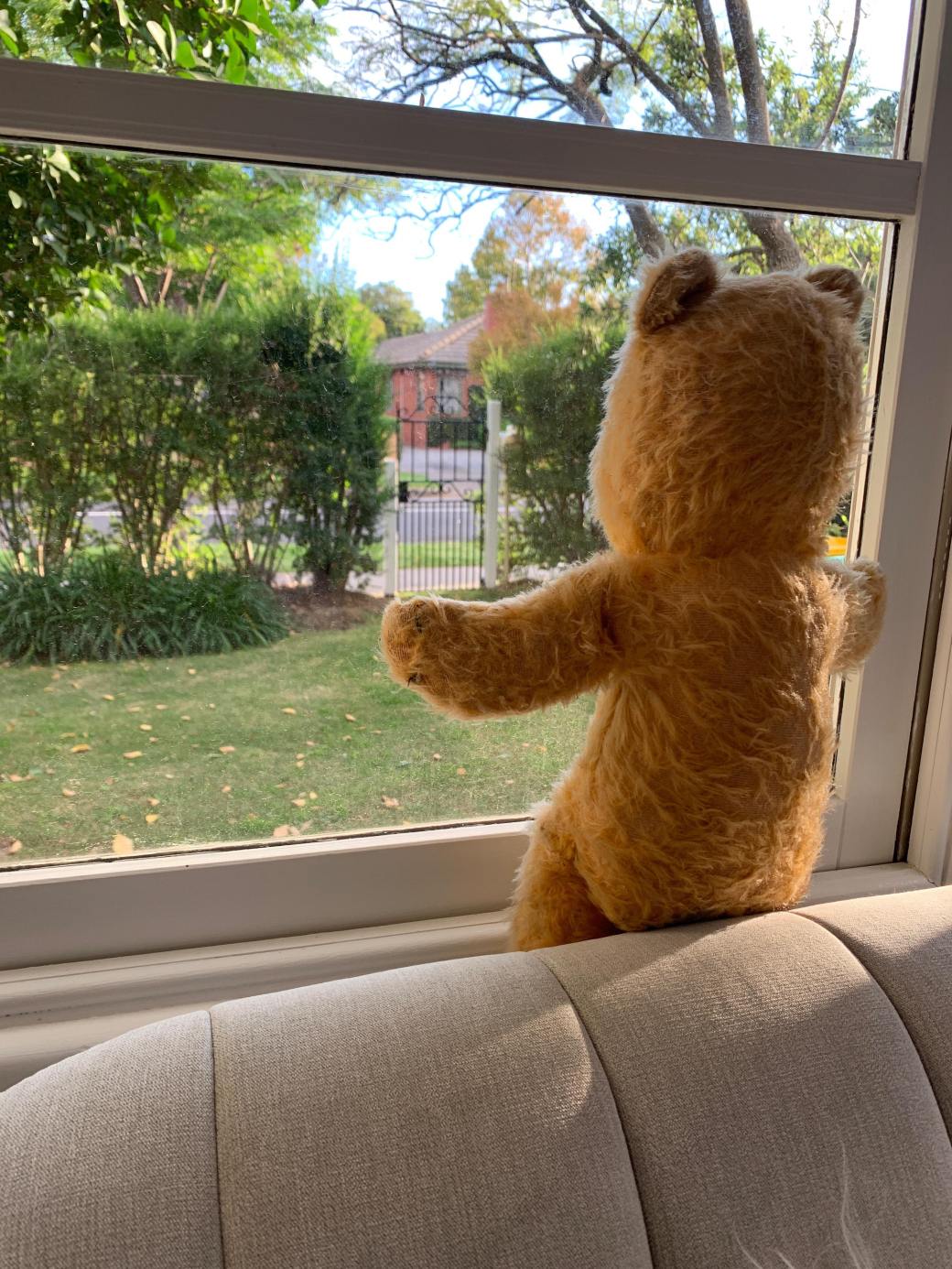
In Australia, a new tradition has started of putting teddy bears in windows. This act is a way of supporting the equally hard-working parents in their own hour of need, parents who are putting themselves at risk by electively trapping themselves indoors with bored kids, hyped up from the endless episodes of Peppa Pig and sugary snacks used to try and bribe them into complying with the corona restrictions. The bears are a sign of solidarity to these silent warriors waging their indoors wars, hopefully providing a small respite for the parents who have escaped outdoors for a spell with their kids by supplying a game for the stimulus-deprived children wherein they can go for a “bear hunt”, gleefully pointing out the bears they spot to their rung-out progenitors.

Bear Hunt

Photo credit: Julie Marsden-Sayce

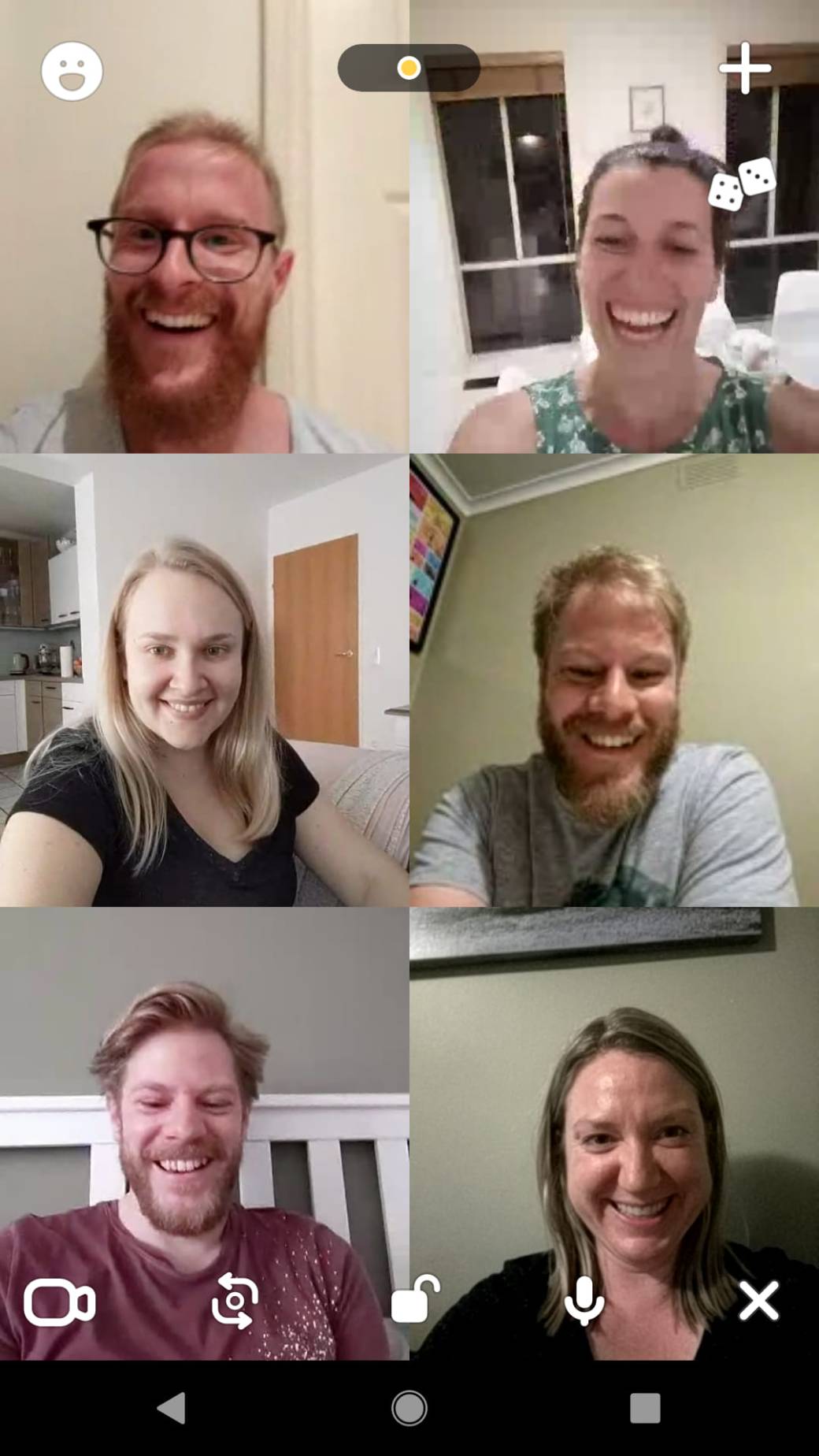
What is equally important to me during this lockdown is my own private community. I am lucky enough to have a circle of family and friends (many members of which are both my family and my friends) who, through equal measures of love, thoughtfulness, and downright silliness, are supporting me in these weird times. One of those who falls in the middle of the Venn diagram of family and friends is my sister-in-law, Holly, who had the misfortune on Saturday of having her birthday in a time when the government won’t let anyone come to your party. But luckily, her added year has made her crafty like a fox and she found a way around governmental restrictions by simply moving that party online. Through an app called Houseparty, we all sat around, had drinks, played games, laughed at each other’s dumb jokes, and properly celebrated the anniversary of our friend’s birth. 

After a brief adjustment period, I soon forgot that my favourite people were actually thousands of miles away and lost myself in the fun and joviality I always find when hanging with that particular collection of people. The fact that I was drinking beer at ten in the morning may have helped with that. (I just realised that not everyone reading this would be aware that, besides Alex and myself, the rest of the party people were in Australia, in a different time zone, which happened to be their evening, hence the party and hopefully explaining away my alcohol intake with an answer that isn’t “he has a terrible drinking problem.”)

Party time

Photo credit: Holly Robb

After partying away the morning, Alex and I ventured outside for some sunshine and fresh air, and so I could sober up a little, and went for a walk. Spring apparently didn’t get the memo that the whole world’s on pause at the moment and Vienna put on a fine day to get out and into our community. We were accompanied by my friend and my wife’s best friend, Natalie, who we had to greet with a limp wave from a space of two metres away instead of the usual kiss to each cheek. It felt impersonal and cold to give such a half-hearted greeting, but as the alternative was to risk infecting a dear friend with a horrible virus, or to have her infect us, we accepted our wave as the lesser of two evils.

The walk was beautiful and the company just as satisfying, and we were upstanding role models of the community as all conversation was conducted from either side of the walking path or with Natalie trailing behind like some sort of terrible stalker who doesn’t know enough to stay out of sight. See photos below as evidence of our commitment to do our part for social distancing.

This interaction with my community, done with no physical interaction whatsoever, recharged that battery within myself that needs that sort of energy and, ironically, gave me the strength to continue to stay the hell away from these people that I love. At least for long enough for the storm to pass and I can once again greet them in a fashion more befitting the affection I feel for them.

Tomorrow: Music.

Vienna in the time of COVID – Chapter 9

When discussing worldwide pandemics, very few people interrupt the conversation to point out the positives that come from a sweeping global infection. It’s quite likely because, when weighed against all the sheer awfulness of a widespread contagion (sickness, death, economic collapse), those trying to make these points are promptly chased out of the room. With rocks. 

But as the bad media seem singularly motivated to drive the negativity of the moment down our throats until we are full and heavy and sad from it all, and as I am tucked in my apartment out of rock-throwing distance, I thought I’d highlight some of the unforeseen changes to the environment that have come about due to humanity hibernating for a spell.

As it is the place where we like to live, and the place where our food is farmed which we like to eat, and the place where the major production of carbon-dioxide into oxygen occurs which we like to breath, it’s not aggrandising to say the environment holds a certain special significance to us as a species. Unfortunately, as a species, we have the habit of treating the environment in the same way a teenager treats their room, which is to say the floor is littered with filth, the space is rife with noise pollution, and the air is not always safe to inhale. 

But amazingly, or perhaps not so amazingly to those environmentalists who have been trying to convince the world of man-made climate change for the last few decades, once everyone turned off their toys, some of that damage started to become undone. 

The first story I heard that drove this home was a report of dolphins appearing in the canals of Venice due to the cessation of water vehicles for the first time in years. Sadly, this story, which is ready made for a Disney film, is not actually true. Dolphins were indeed spotted, only they were spotted in Sardinia, which is approximately 748 kms away from Venice. I’m sure the dolphins in Sardinia are also appreciating the reduction of boats in their waters, but are apparently not so energised as to make the trip to Venice. 

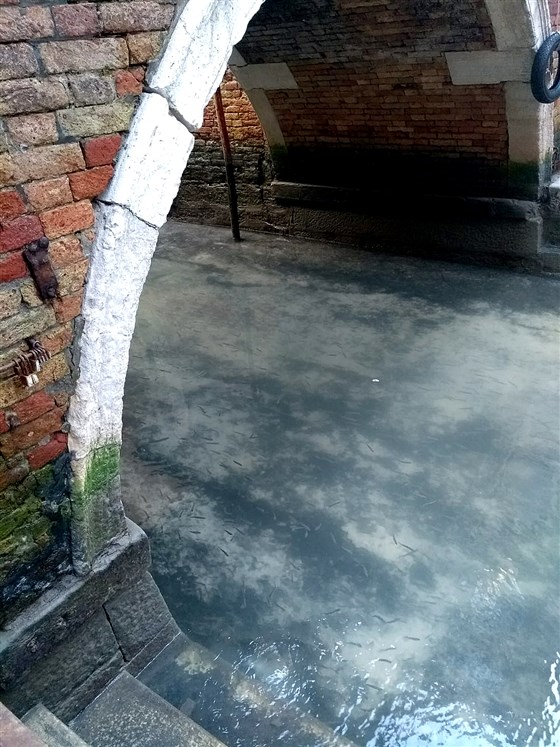
But, the good news is that, while apparently not good enough for dolphins too lazy to swim a few hundred miles, the waters of Venice are indeed cleaner than they have been in years, with locals shocked to see the liquid running clear. Let’s try not to focus on the tragedy of people shocked at seeing clean water and instead take it for the win it is.

Venice's clean canals

Photo credit: Marco Capovilla / Venezia Pulita

Air has also benefited from humanity’s downfall, which in a circular irony is actually our windfall as we can all, literally, breathe a little easier. Satellite photos taken from above Beijing depict the incredible reduction of nitrogen dioxide in the atmosphere, a substance made famous as the pollution that spills from cars, trucks, and power plants.

Reduction of China's air pollution

Photo credit: NASA

There have also been numerous reports of animals taking to the streets after the desertion of mankind. Much like Kevin from Home Alone, these animals are wandering around the empty house, not sure where the grown ups are, but sure to make the most of it. I wish the cheeky little scamps the best of luck while we’re away.

Deer crossing

Photo credit: Tomohiro Ohsumi / Getty Images

But it is not only the external environment that has changed as a result of the COVID measures. Driven indoors and away from our offices filled with appropriately-sized desks and chairs that support the lower back, Alex and I were forced to go to some extreme lengths to reconfigure our internal environment to ensure we don’t emerge from the corona-confinement with the spines of an arthritic geriatric.

We knew the problem lay in a lack of suitable hardware and so set about rectifying the problem the only way bad-asses like us knew how: I’m talking about a raid, baby.

We hopped in the car, buckled ourselves in, took a moment to savour being outside of our apartment for the first time that day, and then pointed ourselves in the direction of Alex’s work. The place was lousy with office furniture and we were going to leave the place with a cache of our own if it killed us.

It turns out it didn’t kill us, nor was our doing somersaults through doorways and army-crawling down hallways at all necessary. The place was all but empty except for one of Alex’s colleagues who made polite small talk while we shoved monitors into an Ikea bag and wheeled away a couple of desk chairs. The colleague was supposedly in the office to get some work done, but the platter of bread, butter, and huge slab of bacon set up at his desk, plus the fact that we knew he had three children at home bouncing off the walls with the enforced isolation, said this was more of a place of escape than a place of work. 

We tipped our hat to him and his scam and he tipped his hat to us and ours, and then we got the hell out of there.

The result of our perfect heist is a living room/home office that acts as a site of productivity rather than the slow and incremental torture of our joints and ligaments. Sometimes the crime is worth the risk.

Vienna home office

Photo credit: Alexandra Robb-Hofer (Bonus “Where’s Jonathan?” for those who want to play)

I’ll finish off this entry and this week with an incredible video my mother-in-law shared with me which beautifully and eerily illustrates the impact this surreal moment in history has had on the city of Vienna.

Empty Vienna from Christian Haake on Vimeo.

Have a great weekend, everyone. Stay inside, video chat with someone you love, do a puzzle on your living room floor with a drink and some conversation, read a good book, eat your favourite food, make something, draw something, cook something, and let’s make the best out of what we still have. 

On Monday: Community.

Vienna in the time of COVID – Chapter 8

Health. It’s what the current game is all about. The health of ourselves, our loved ones, our communities, our pets. Actually, no, the pets are fine. In fact, they are loving this whole thing. Really making lemonade out of the lemons that is the human race being trapped indoors all day.

But while we have all barricaded ourselves away in an effort to preserve our health, we have to be careful while enacting these precautions not to neglect our health (seems contradictory, right? She’s a right gordian knot, this health thing).

It turns out that spending all day indoors, away from things like fresh air and sunlight, and dangerously close to things like boredom and a well-stocked pantry, can have serious health ramifications. The problem boils down to a loss of routine. 

As an example, during my trip to work, I used to deliberately take the stairs and not the escalator when leaving the U-Bahn, meaning I would climb four flights before I even made it to work. A shining beacon of health and fitness, I know. But without the usual routine of my morning commute, I now only need six strides to make it from my bedroom to my bathroom, and then a further four strides to make it to my workspace/dining room, and then that’s pretty much me done for the day. Between the journey from bed to office and a number of trips to the toilet, a number that is determined by how well hydrated I am and what sort of effect the overnight oats is having on my digestive system, this new routine, as the judgemental fitness app on my phone keeps pointing out, only has me doing maybe ten move minutes a day. Koalas sleep twenty-two hours a day and still manage to move more than that.

But if routine is the problem, then routine is also the solution (again, seemingly paradoxical, but I swear there’s calculation in the chaos). This new style of living requires the drafting of a new routine, and when sketching out the blueprint of this routine, it’s important to build health into the foundation of it. 

I’m sure by now you are all sick to death of reading graphs and watching instructional videos on how to wash your hands (but these are super important, so if you haven’t seen them, go out and watch them until you’re sick to death of them), so I thought rather than rehash something that has already been thoroughly hashed, I’d go through some everyday tips that you can incorporate into your new routine to ensure we all come through this as healthy as possible. 

1) Start each day with a fresh breakfast: I recommend a bowl of my wife’s delicious overnight oats (as previously detailed in Chapter 2 of this series). Of course, in order to have my wife prepare you a bowl of her delicious overnight oats, you would first have to do what I did and travel overseas, accept her invitation to visit her during your travels, awkwardly start up a romantic relationship while her parents are in the next room, commence a long-distance relationship, maintain this relationship over a four-year period, eventually propose to her by writing her a book, marry her, and finally move to Austria and rent an apartment with her. Given that, it’s probably easier just to make your own oats.

2) Work out before work: Prior to committing to sitting at your dining room table in front of a laptop for the next eight hours in a position orthopaedic surgeons call “woefully unergonomic”, try moving your body a little to shake out those kinks and to give your vertebrae a breather. Alex and I do a short yoga session each morning, but you can do whatever turns you on. A run, a series of stretches, a short work-out routine, or a bout of competitive wrestling with your spouse will all get the blood pumping and preserve your musculoskeletal health.

3) Resist those seductive snacks: If you’re anything like me, the minute you step into your place of habitation, you can hear the whispers drifting out from the pantry, reminding you of that still half-full bag of chips waiting for you, or the block of chocolate you swore to yourself when buying you’d save until the weekend. Living in the time of COVID means rarely leaving your home, which means those snacks have all the hours in the day to tantalise and tempt. If the new routine includes eating your body weight in snacks each day, then a very different person may come out the other side of social isolation. 

4) Eat those snacks, baby! Your mental health is also incredibly important and will be tested during times when you’re deprived of family, friends, and some good old physical contact. So if the need hits, if you’re feeling flat and need a pick-me-up, then you dive into those snacks headfirst and guzzle them up as if fat and sugar were oxygen.

5) Vitamins for vitality: One of the best things you can do to stay healthy and support your immune system is a well-balanced diet including a range of foods that contain vitamins A, B, C, D and E, and the minerals iron, zinc and selenium. Of course, in times where selfish muppets are clearing out the vegetable stands of your local supermarket, this can be a challenge. If necessary, you can supplement your diet with some multivitamins. My wife favours a liquid mixture called Metavirulent that tastes and feels like bleach draining through my sinuses and across the backs of my eyeballs. She swears it’s good for me.

Whatever shape your new routine takes, be sure to factor in health, both of the physical and mental variety, look after yourself, look after anyone who’s with you, and by doing so we can win this game.

Tomorrow: Environment.

(For actual advice without all my silliness, check out my cousin and his fiancee’s health and fitness facebook page. Nikki and Dom have a wealth of information between them and more motivation and energy than two kids who have just slammed back six sleeves of wizz fizz. You can find videos, exercise instructions, and, let’s be honest, a certain level of silliness. But they back their silliness up with expert knowledge so you come out on top.

You can find their site here.)