SNAPSHOT #01

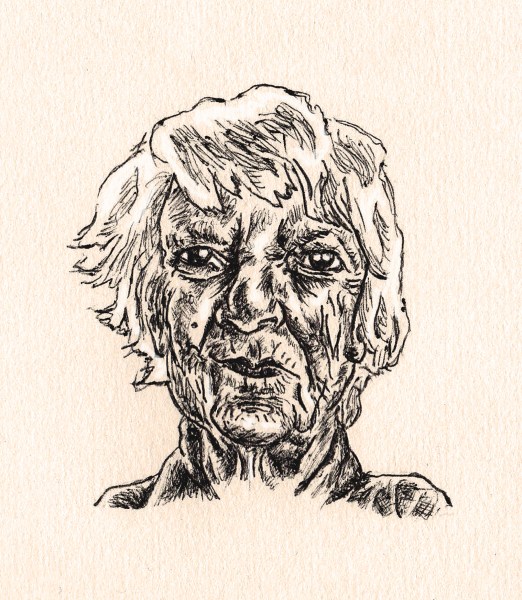
The two of us sat at her round wooden table, a young man and an elderly Italian woman, and she told me about her husband, a man she was married to for fifty-three years, and who had died nine years ago. Between sentences she slipped individual pills between her lips, sipped at a glass of water, then continue detailing the attributes of her happy marriage. Her husband’s black and white face grinned at us from a framed photo on the wall, and her eyes latched to the image as she spoke, a small sad smirk to her mouth.

I pulled her heavy medical folder in front of me and she fell quiet as I wrote about the care I had administrated that day. From the silence she said this quote, nodding at the folder, and I was pleasantly surprised by the accuracy of her observation.

“The story of my life is getting longer.”

SINGULARITY IN WRITING

One of the things that fascinates me about the act of writing is how every time I tap at the keyboard I create something that is entirely unique than if I had written it the day before. Let me explain:

When I sit to write I have an idea of what I want to say, what will happen, but the words I use to describe a scene I make up as I go along. The very sentence I just wrote and the one I’m writing now I am piecing together as I feel necessary, like laying tracks in front of the moving toy-train that is the point I’m trying to make. The particular string of words is unformed until the moment I write them. This means that if I was to write a scene today, or delay until tomorrow, the two pieces of writing would be entirely different. Maybe the core of the pieces would mirror one another, but the exact landscape of the words would be unique. The examples I use, the similes, the dialogue, and the descriptions would all depend on the mood I was in while writing, the things I had seen recently that were still fresh in that outermost layer of my consciousness, ready to be taken and applied where appropriate.

Maybe on Day A I saw a client with a tabby cat that lounged at his feet, overweight and unperturbed by the prodding of my client’s toes under the table. Maybe I wasn’t even focused on the cat during the visit, but a small part of my mind noticed and found it amusing, and filed it away. Then when I sat to write later that day, and I want to make the backdrop of a scene more interesting, I add a tabby cat, overweight and lazy.

But say instead I delayed to write the same scene until Day B, but by this point the cat has been forgotten. So to give interest to the environment I include some detail about horrid wallpaper, taken from a memory of wallpaper that used to coat my own bedroom.

Both scenes are painted differently, giving a different flavour depending on what came to mind in the moment of writing. The outset was shared, but simply by where my consciousness was at that point in time, two individual pieces would be created.

I love this principle. I love that no matter what I’m writing it is singular to that day and that environment and that frame of mind. Even the words I just wrote, the use of the word “singular” – perhaps tomorrow if I sat to write this piece the word singular would never appear in my head. The example of the cat may never have occurred to me. Maybe I never would have worked the piece around to detailing an example, instead I could have gotten lost on some tangent, changing the point of the piece altogether.

Why do I love it? Because it means there’s no right way to write a piece. There is no ideal phrasing or perfect sentence; it’s just whatever happens to happen that day. Each patchwork of words is a representation of the specific date and time, and the more diverse because of it.

It also means that the options for creating unique pieces of writing are limitless. Every time I crack open my laptop I am a different person with a different set of thoughts, making each act of creativity a new one.

But what I love most about this theory is that it can be applied to more than just writing. Living each day can be, and is, done in the same fashion. Think about the correlations. Each time you wake you are writing the story of that day. The thoughts you have and the things you say are entirely different from the day before. Now, maybe you’re thinking that your days are repetitive. That each day is not unique. You are wrong.

Even if you leave the house at the same time, arrive at the office at the same time, and head home at the same time, every moment in between is that moment, completely new and original than any other moment in your life. And by realising this you have the ability to write your day any way you like.

You can add excitement to dialogue by saying the joke that comes to mind that your normally keep to yourself. The moment is new; try the joke and see what happens.

You can add new characters by deciding at the start of the day to engage in conversation with that work colleague you don’t really know and have hardly spoken to before. Talk to them, and see where the scene goes.

You can add a tangent in your day by not getting home and falling into the same routine. Go for a walk. Go to the movies. Phone someone you haven’t seen in years. Go swimming. Do anything: the moment is unique, and yours to make of it what you will. There is no wrong way to write it.

And in the same way a writer would write a scene to add excitement, and tension, creative descriptions and intriguing characters, you can write your day in the same way. Don’t just settle for a drab and repetitive diary entry, write your day as if it were a short story you couldn’t put down, filled with plot twists and humour, adventure and reflection.

Each day is a new one, a new collection of words to string together, and an opportunity to write something perfectly singular.

WORK OF A DIFFERENT KIND

It was a forty-four degree day, and the fourth in a row, and I was sitting in my car outside the home at two pm, glaring at the sun glaring at me, annoyed that I should be there. Why two pm? I thought, and glared, and stepped from my car into the hammering heat, and sweated as I retrieved my bag from the boot. In and out, I justified to myself, then back to the office and air conditioning – no one should have to work on a day like this.

A young boy answered the door, a grandson I later found out, and let me in, and I noticed straight away with my stiff warm breaths the lack of the house’s air conditioning. He came out, Vince, the husband, holding her hand, Sepharina, the patient, and squinted at me from his tanned face and singlet, off-white, and I told him who I was. The nurse, I said, and his face relaxed, and he smiled with crooked teeth a smile that seemed more genuine because of the imperfection. I shook his hand and he bobbed his head and thanked me, and introduced his wife. Her hand was cold as I clutched it, and limp with uncertainty as she tried to place me, to figure out why I was there and if she should know me. I told her my name and she repeated it softly, and I encouraged her, yes, that’s me.

Vince explained my position, Doctor, he said, and I didn’t disagree because she smiled and I could see a piece slid into place in her head. I sat at the table as Vince eased her into a chair, Small steps, you’re almost there, then sat opposite me, and we both flashed her comforting grins before getting down to business. I told him the hospital had sent me, clarified that she was only home recently? Just today, he said, and the reason for the two pm visit dropped like a coin in my head, and I continued that I was there to help. The relief was apparent in his shadow-sagged eyes as he stated, The hospital is so confusing sometimes, and she asked, Why? and he repeated my words, then patted her hand at the lack of comprehension, and the tension eased from her face – he had it all in place.

Her medications? I asked, How are you coping? He collected her packets and bottles, and opened and closed them, and listed the timing and dosage of each of them, and I realised he knew them better than me. He asked questions, which I answered, about side-effects and tests not done yet, and as we talked I was only vaguely aware of the sweat running down my hair. She picked up a bottle and moved it away and he patted her hand and told her to let it stay, that I might need it, so best if he keep it. She gave a slow nod, and I nodded with her and she smiled to be included in things she didn’t quite follow, but comforted that her husband knew the purpose of the bottle.

I asked about the supports he was receiving, Showering, respite and cleaning? and he thanked me and said, Yes, that he needed them because he was tired, and I sighed and sympathised because I could see the truth of it in the lines of his face. She played with the tablecloth and he reached out a hand without looking, and smoothed the lace back into place.

He was concerned about pads, that he only had three left, and she was prone to accidents, and I explained we’d organise for more, and his frame eased with one less thing to worry about. It was around then that we noticed she was crying, silent sobs from who knows what in the mess of her mind, and he dabbed at her cheeks with a neat handkerchief, and soon the tears were reflected in his eyes. Please don’t cry, he asked and his voice whined, and my heart broke from the shared sadness of a man and his baffled wife.

She quickly forgot what it was and why she was crying, but he held the memory awhile in the heavy breaths of his sighing.

An echo came from behind us in the lounge, a youthful cry, and Vince disappeared while I wrote notes in my file, and returned with a boy, maybe four, with sleepy sweat-streaked hair, and Vince clutched his to his chest and, for the first time, smiled without a care. He told me the boy loved to hug his nonna, and Sepharina grinned, and I knew that at least she understood this one thing, and she hugged the boy, and her joy was breath-taking.

And then we just talked, not about services and pills, but about a man, his life, his wife, and her recent ills, and what that was like. He told me for all his years he’d been a concreter, worked fourteen hour days and stayed away from home to provide for his family, two daughters, one son, but that two years ago he’d decided enough was enough, that he was ready to stop, to clock off, and relax. But that one year in his wife had started seeing things, that she’d forget what she was doing while doing them, that her hands shook, and that he took over her care more and more because she might fall. And he smiled without it showing in his eyes, and said that his retirement wasn’t rest but work of a different kind, because she couldn’t remember whens and wheres, and that he knew life wasn’t fair, but that this wasn’t fair.

He told this to man he’d just met, a man forty minutes ago who’d been more concerned about his own sweat, and I felt small compared to the size of his sacrifice for his wife. What do you say? I told him he was doing an incredible job, and he thanked me and stifled a sob, and I told him how I admired what he did, that not everyone can give something so big, that his wife was lucky in a way, and I hoped it was the right thing to say.

And again, that brief gleam of comprehension lit in her eye, and this time it was her turn to pat his hand and sigh, and say, I have a good husband, my Vince.

The visit was done, and he walked her to the door still holding his grandson, her steps so small and unsure, so they could say their goodbye, and I shook his hand and looked in his eyes and assured him we’d help in what ways we could to ease the work that he now did. A shaky smile lit her face, and I think she was still trying to place me, so I repeated my name and she repeated it with me, and Vince said to say goodbye and so she did, relieved to be told her lines in this bit.

I stepped out into a heat that jellied my knees, and, as the door eased closed behind me with a click, I sighed, looked back, and thought, No one should have to work on a day like this.
2013/14

The year has wound out in its usual fashion and we all remarked on the speed with which it passed, despite the fact that time dripped on at the pace it always has. It’s us that have sped up. We’ve upgraded from the laconic endless days of childhood when a day was as long as we needed it to be, and we didn’t waste time thinking about its ending. When we didn’t have to parcel the hours to ensure the to-do list was completed before the sun finished its arc. Time moved differently because every moment was then-and-there and this-is-happening, and not what-next or yet-to-be-done. Now we are frantic in our awareness of time passing and we fill it with everything so we don’t miss out on anything. The blatant irony is the what-next attitude stops us savouring the everything we have packed into our day. Maybe if we did a little less and embraced the this-is-happening frame of mind we’d feel like we accomplished more.

I feel like I’m in a very different place here at the end of the year than I was at the start.  For me, 2013 was made up of periods of frenetic action with time jumping forward in rapid jolts, and stretches of lonely inaction, bubbles where time was sluggish and sloth-like. This best summarises my experience of being newly single.

The biggest change 2013 brought was the ending of my five-year relationship. It altered everything. On reflection, I’m proud with how something that was so hard and tender and painful played out. Neither I nor my girlfriend felt the need to sink to the numb-mind state of hurling insults and lashing out. We didn’t hate each other, you see, we loved each other. But we didn’t fit together. And because of that we conducted our break-up with the same love with which we had conducted our relationship.

Facing the realisation of it was horrible. We both stared down our lives to a future where the other person no longer played a vital part. Where odd thoughts and in-jokes could no longer be shared, and where unquestioned support we had come to rely on was suddenly pulled away. We hated that reality and so ignored the stalled one we were living in for as long as we could. But eventually we agreed that an uncertain future was less of a risk than a present we were no longer enjoying. And so in April of 2013 we broke up.

The last time I was single I was twenty-one. I was an adolescent university student. Nursing was a course I had just begun, and not a life-changing career I had immersed myself in. I lived in Gippsland with my parents. I thought in simpler patterns and had a very different set of priorities.

The silver side of the thunderhead that is a breakup is the inescapable self-reflection that follows. After my break-up I had time where I was alone. Time where my to-do list got done and I was left sitting in my house thinking all the thoughts I usually pushed to the edge of my brain. I thought about who I was, and more importantly, who I felt I should be. Inescapably, I looked at myself without the identifier of boyfriend, but just me, with just myself to keep happy. And I had to learn how to do that. I had to learn what made me happy, and what I wanted to do with all the time that had suddenly opened up before me. If I wanted to be selfish with that time, or spread it around to the people in my life. Without planning for it, I had choice.

I think every break-up, like every change, is the opportunity for metamorphosis. So I changed in ways I had always wanted to, but no longer had a good excuse to delay. I exercised. I read. I wrote. I created. I saw friends. I relaxed with family. And I did it all while learning how to be alone, and deal with the air pockets between these activities when I just missed having someone around who loved me.

So change happened to me in 2013, and I changed. But it wasn’t just me. In my immediate family alone, every one of them changed. My twin brother took the courageous step of tackling an entirely new profession and industry because it meant he would be doing something he was passionate about. He quit full-time work and the comfort of full-time income, and set himself up with part-time employment and the challenge of entering a new field. He has already been successful in this due to his diligence, determination, and the intelligent and hard-working way with which he approached his self-appointed task.

My parents continued their growth into the post-children world and made more of their year than I thought possible. Without question, their social calendar outstripped mine to the point where planning two weeks ahead was the safest way to ensure I saw them. They have embraced this period of their life, and, far from slowing down, have sped up.

My sister, in a similar vein to my brother, has excelled in her new profession of being a yoga teacher. She followed her passion and worked harder and with more dedication than I thought possible of one person, and has gone from strength the strength. I’ve had the pleasure of being her student and the professionalism and breadth of knowledge she displayed was inspiring.

And finally, my older brother became a father. I can’t even describe how incredible it is to write that sentence. I know in my bones that he will be an amazing dad, and can’t wait to watch as that relationship develops. It is a life-changing, family-changing event, and a joy to be a part of.

We all changed in the past twelve months, and if I wanted to I could continue to look at my extended family and friends, and find that change has affected them all. In the same way we remark on the increasing speed of a year despite its continued metronomic pace, we remark on what a big year 2013 has been despite the fact that they’re all big years. Every year contains change, but the beauty of book-ending these periods of time is in the nature of stopping, of sitting with the this-is-happening frame of mind, and appreciating all that was accomplished. Of letting go of the what-next attitude and marvelling at how we have evolved and are evolving.

So here’s to 2014, to change, and to less of the what-next and more of the this-is-happening.

A PROSE PERFORMANCE

The combination of music and spoken word can be a powerful thing, as I was reminded when listening to a poetry performance by Shane Koyczan. The ability of the music to add weight to words, to add texture and ambience and scope, allows the recital to become something bigger than just speech, and falls into the category of performance.

With musical accompaniment words seem to resonate with meaning, the melody acting almost as an instrumental highlighter, drawing our ear to the powerful key phrases and stamping the evocative images into our brains. Music stirs something in us on a visceral level that words alone can’t always accomplish. It pierces deeper than the surface intellectual appreciation of the words we’re hearing and makes us feel them.

For this post I’ve taken a previous post, Whatever Helps You Sleep, and recorded it as a performance with my guitar playing to support it. Some may say using a previous post is cheating, but I say it’s my creative brain adapting it. It’s a loophole.

Listen below:

The video that inspired my own performance can be seen underneath. It’s also well worth checking out Shane’s video titled “To This Day” which can be found here.