SNAPSHOT #01

The two of us sat at her round wooden table, a young man and an elderly Italian woman, and she told me about her husband, a man she was married to for fifty-three years, and who had died nine years ago. Between sentences she slipped individual pills between her lips, sipped at a glass of water, then continue detailing the attributes of her happy marriage. Her husband’s black and white face grinned at us from a framed photo on the wall, and her eyes latched to the image as she spoke, a small sad smirk to her mouth.

I pulled her heavy medical folder in front of me and she fell quiet as I wrote about the care I had administrated that day. From the silence she said this quote, nodding at the folder, and I was pleasantly surprised by the accuracy of her observation.

“The story of my life is getting longer.”

WORK OF A DIFFERENT KIND

It was a forty-four degree day, and the fourth in a row, and I was sitting in my car outside the home at two pm, glaring at the sun glaring at me, annoyed that I should be there. Why two pm? I thought, and glared, and stepped from my car into the hammering heat, and sweated as I retrieved my bag from the boot. In and out, I justified to myself, then back to the office and air conditioning – no one should have to work on a day like this.

A young boy answered the door, a grandson I later found out, and let me in, and I noticed straight away with my stiff warm breaths the lack of the house’s air conditioning. He came out, Vince, the husband, holding her hand, Sepharina, the patient, and squinted at me from his tanned face and singlet, off-white, and I told him who I was. The nurse, I said, and his face relaxed, and he smiled with crooked teeth a smile that seemed more genuine because of the imperfection. I shook his hand and he bobbed his head and thanked me, and introduced his wife. Her hand was cold as I clutched it, and limp with uncertainty as she tried to place me, to figure out why I was there and if she should know me. I told her my name and she repeated it softly, and I encouraged her, yes, that’s me.

Vince explained my position, Doctor, he said, and I didn’t disagree because she smiled and I could see a piece slid into place in her head. I sat at the table as Vince eased her into a chair, Small steps, you’re almost there, then sat opposite me, and we both flashed her comforting grins before getting down to business. I told him the hospital had sent me, clarified that she was only home recently? Just today, he said, and the reason for the two pm visit dropped like a coin in my head, and I continued that I was there to help. The relief was apparent in his shadow-sagged eyes as he stated, The hospital is so confusing sometimes, and she asked, Why? and he repeated my words, then patted her hand at the lack of comprehension, and the tension eased from her face – he had it all in place.

Her medications? I asked, How are you coping? He collected her packets and bottles, and opened and closed them, and listed the timing and dosage of each of them, and I realised he knew them better than me. He asked questions, which I answered, about side-effects and tests not done yet, and as we talked I was only vaguely aware of the sweat running down my hair. She picked up a bottle and moved it away and he patted her hand and told her to let it stay, that I might need it, so best if he keep it. She gave a slow nod, and I nodded with her and she smiled to be included in things she didn’t quite follow, but comforted that her husband knew the purpose of the bottle.

I asked about the supports he was receiving, Showering, respite and cleaning? and he thanked me and said, Yes, that he needed them because he was tired, and I sighed and sympathised because I could see the truth of it in the lines of his face. She played with the tablecloth and he reached out a hand without looking, and smoothed the lace back into place.

He was concerned about pads, that he only had three left, and she was prone to accidents, and I explained we’d organise for more, and his frame eased with one less thing to worry about. It was around then that we noticed she was crying, silent sobs from who knows what in the mess of her mind, and he dabbed at her cheeks with a neat handkerchief, and soon the tears were reflected in his eyes. Please don’t cry, he asked and his voice whined, and my heart broke from the shared sadness of a man and his baffled wife.

She quickly forgot what it was and why she was crying, but he held the memory awhile in the heavy breaths of his sighing.

An echo came from behind us in the lounge, a youthful cry, and Vince disappeared while I wrote notes in my file, and returned with a boy, maybe four, with sleepy sweat-streaked hair, and Vince clutched his to his chest and, for the first time, smiled without a care. He told me the boy loved to hug his nonna, and Sepharina grinned, and I knew that at least she understood this one thing, and she hugged the boy, and her joy was breath-taking.

And then we just talked, not about services and pills, but about a man, his life, his wife, and her recent ills, and what that was like. He told me for all his years he’d been a concreter, worked fourteen hour days and stayed away from home to provide for his family, two daughters, one son, but that two years ago he’d decided enough was enough, that he was ready to stop, to clock off, and relax. But that one year in his wife had started seeing things, that she’d forget what she was doing while doing them, that her hands shook, and that he took over her care more and more because she might fall. And he smiled without it showing in his eyes, and said that his retirement wasn’t rest but work of a different kind, because she couldn’t remember whens and wheres, and that he knew life wasn’t fair, but that this wasn’t fair.

He told this to man he’d just met, a man forty minutes ago who’d been more concerned about his own sweat, and I felt small compared to the size of his sacrifice for his wife. What do you say? I told him he was doing an incredible job, and he thanked me and stifled a sob, and I told him how I admired what he did, that not everyone can give something so big, that his wife was lucky in a way, and I hoped it was the right thing to say.

And again, that brief gleam of comprehension lit in her eye, and this time it was her turn to pat his hand and sigh, and say, I have a good husband, my Vince.

The visit was done, and he walked her to the door still holding his grandson, her steps so small and unsure, so they could say their goodbye, and I shook his hand and looked in his eyes and assured him we’d help in what ways we could to ease the work that he now did. A shaky smile lit her face, and I think she was still trying to place me, so I repeated my name and she repeated it with me, and Vince said to say goodbye and so she did, relieved to be told her lines in this bit.

I stepped out into a heat that jellied my knees, and, as the door eased closed behind me with a click, I sighed, looked back, and thought, No one should have to work on a day like this.

PROSTATES AND EMPATHY

I’ve wanted to tell this story for a long time, but it took me a while to figure out how best to tell it. It’s about a man I met during a nursing placement in my second year of university. I tried writing it as a short story but it felt flat. Then I tried writing it as a verse poem, but quickly discovered it would be the longest verse poem in history, and who has the patience to read a painfully long verse poem?

But I think I’ve figured out the underlying problem: I was telling the story from my patient’s perspective. I thought this would bring some immediacy to the tale, but I’ve decided the power of the story isn’t from showing the elderly patient’s point of view, it’s from showing a young naive nursing student’s. In this case, being an observer is what gives the story its guts.

So now, I’m just going to tell it:


The placement was my second effort at actually entering a nursing environment and getting my hands dirty, literally, and my first within a hospital. Before this I had spent two weeks in a nursing home during my first year, and, while shockingly confronting, there was no real acuity to the experience. The patients weren’t patients, they were residents, and the job was to maintain their comfort. This was a real hospital. Looking back, it’s almost laughable; the hospital was the tiny rural hospital of Leongatha, which has a total of twenty-eight beds. A single ward of a metropolitan hospital has more beds than that. But, for me, it was a real hospital, and I felt hopelessly inept within its walls.

I met Ron on my third day. He was in his seventies, a local, and had been admitted because he couldn’t empty his bladder. Or, to be technical, he had benign prostatic hyperplasia. Basically, for whatever strange hormonal reason, when men get over the age of fifty it’s not uncommon for their prostate gland to begin growing. The trouble with this is the prostate wraps around the urethra, the tube through which urine is drained, and a growing prostate literally chokes the urethra. This results in an almost perpetually full bladder. Not a good thing.

I’ve wondered what Ron saw when he first met me. Meeting Ron, I saw a silver-haired old man with smile lines on his face and an ease I immediately admired. He was a person comfortable in any situation because he was comfortable in his own skin. He knew himself and liked what he found. I think, upon meeting me, he must have seen the opposite: an awkward young man unsure of himself and his place within the hospital.


The compact nature of the Leongatha hospital meant not only did I get to care for Ron both pre and post his operation, but I also had the opportunity to be there with him during the actual procedure. The operating room was ten meters away from the ward.

I remember stepping back from Ron’s trolley where we had stopped outside the operating room’s double doors to give space for his wife to say goodbye. It felt too formal, that moment, a pause for the wife to say words of sentiment. I both liked the official nature of the final farewell and found it slightly ridiculous, with the staff standing watch like respectful morticians. Ron wasn’t going in for heart surgery, and while there can be complications, death was a very far off possibility. Ron also saw the humour in the moment and joked while his wife attempted to be sincere. She eventually rolled her eyes and laughed him off, telling him to behave with the nursing staff. He threw me a wink as he promised he would.

We went through the double doors, his wife now marooned on the other side, and I waited with Ron while final preparations were made to the operating room. I wanted to keep Ron company, but I also had no idea where I was meant to stand, and beside the patient’s trolley seemed like the most appropriate place. Ron chatted with me while he lay, and I stood, in the cold hallway, and on reflection I realised he did this as much to keep me distracted as himself. Any nerves either one of us felt were diluted with conversation. It didn’t take Ron long to break his promise and give incorrect answers when asked by the surgical staff to repeat his name and date of birth. He found claiming to be twenty-six vastly amusing, and had a way of laughing that made it impossible not to laugh along with him.


One of the starkest images I have from that operation was before it had even commenced: seeing Ron have his epidural inserted. The operation Ron had is called a TURP, or a transurethral resection of the prostate, and it is done with the patient fully conscious. The epidural numbed Ron from the waist down. To have the needle inserted the patient sits on the edge of the operating table, curled forward, while the anaesthesiologist counts vertebrae and inserts a sharp splinter of metal into the spine. Given the delicate nature of such a procedure the patient must stay as still as possible, which means they can’t talk.

Seeing Ron topless and hunched forward, his face devoid of the usual animation talking gave it, made him seem so much older than he had before, as if he was now just another patient, a frail and scared man. He looked vulnerable, and it made me admire the strength with which he held himself the rest of the time to hide this fact.

My other vivid memory of the surgery was the smell. A TURP is done by inserting a long tube up the penis to where the prostate sits around the urethra, where the blockage is. The tube does two things: it constantly floods the bladder with fluid that drains away down a separate lumen, taking with it the blood from the soon-to-be bleeding prostate, as well as being tipped with a small metal loop that, when electrified, becomes instantly white-hot. The loop is what does the carving. The surgeon sends pulses of electricity into the metal and then scraps it along the inside of the prostate where it is growing into the urethra, burning away strips of gland. Think coring an apple from the inside.

The smell I smelt was cooking flesh. As the loop fried the prostate the smell of it drifted around the room, the smell of a steak in a frypan. It was made worse by the fact that it wasn’t instantly offensive, only when you realised what it was you were smelling. Ron, of course, was unperturbed by his own cooking prostate and found plenty of humour in the situation, joking about what a fine chef the surgeon was.


The climax of Ron’s tale, and moment that awed me and made Ron unforgettable even after five years of patients, came on the day after his surgery. He was back on the ward, only his bladder still wasn’t emptying.

After a TURP, an irrigation system is set up so that fluid constantly runs through a catheter into the patient’s bladder and out again into a giant catheter bag that sits beside the bed. The prostate is a highly vascularised gland, and, even with the cauterising effect of the searing hot loop, still bleeds profusely after the surgery. The fluid goes into the catheter clear but drains away a deep red. The liquid lightens as the bleeding slows and eventually stops and this is when the hospital staff know it’s safe to cease the irrigation.

The risk? Clots. Blood pooling in the bladder and urethra is a bad idea on the best of days, but the real risk comes when the blood congeals and becomes a plug, effectively creating the same outcome as a urethral-choking prostate. Unfortunately for Ron, despite the irrigation, clots had still formed and blocked his catheter.

This was the scene: Ron sat reclined on his bed, legs spread and his gown flicked back over his stomach. Two doctors crouched between his open limbs, working with the catheter inserted up his penis. Blood and saline soaked the beds sheets as the doctors took a large syringe and squirted further fluid up Ron’s catheter.

The idea is to create turbidity within the catheter and bladder by quickly shooting liquid up the tube, thereby dislodging any clots. The doctors then draw back on the syringe and hope to suck the catheter-plugging clots out of the bladder.

The problem was the clot stopping Ron from being able to drain had wedged itself in the lumen that took fluid away from the bladder. This meant the doctors could squirt saline up but not drag it down. Ron’s bladder was already full from the irrigation and the pressure was only getting worse. Imagine that moment when you have held off from going to the toilet for too long, the worst incidence in your life, maybe a car trip, or a meeting, when your whole lower abdomen is cramping and you’re bitting your lip to stop from whimpering in pain. When it feels like something might literally rupture inside you. Now multiple it tenfold. Every time the plunger of the syringe went down Ron fought to stop his body from buckling in agony.

So there’s the scene – Ron in torment as his already overfull bladder gets another shot of fluid that has no way of coming out, blood staining the sheets from previous attempted recatheterisations, and all dignity discarded in the heat of the acute situation. Even with his gown covering his top half, Ron was as exposed as a human can get.

This is when his granddaughter chose the unfortunate timing to visit, and to make matters worse, with a new boyfriend in tow.

Naturally the nursing staff intercepted Ron’s granddaughter on the other side of the curtains and explained the situation, suggesting she wait or come back another time. Ron, however, found the idea of his family coming to visit and his failure to welcome them rude, and so insisted they come in. His granddaughter took a chair beside Ron’s head and held his hand, and Ron joked that he never did anything the easy way. The boyfriend, as unsure of his place as I was, and visible overwhelmed by the intensity and intimacy of the situation, stood to the side of the room, his face a beacon of the fear I was hopefully hiding with my professional demeanour.

I can still remember the exact moment when Ron’s gaze lifted and he saw the young man well and truly past his comfort zone. A shudder racked Ron’s frame and I watched as he bit down his pain, forced his face to relax into a smile, and asked the young man how he was going.

He was fighting down agony, blood spilling from his penis, and he cared enough to reach out and attempt to comfort the stranger who had intruded on this mortifying moment. He had seen a person in distress and acted. I’m sure it was that simple to Ron, regardless of his own torture at the time. He was just that kind of man.


The last memory I have of Ron is as I was leaving, having finished my final shift at that strange and small hospital of Leongatha. We had shaken hands, he had wished me luck, and thanked me for my help. I can’t remember if I thanked him, but I hope I did. If I was back there again I would remark on what an incredible human being he is. I would tell him I admire his strength, and his consideration, and thank him for teaching me an important lesson about empathy, and humour. The final image I have as I left that ward was seeing Ron, the ringleader amongst four other men his age, all having had a TURP, holding up his catheter bag and remarking on the lovely pink colour of his handbag. The men all chortled and displayed their respective bags, commenting on the various shades of red they each had.

He had turned something as embarrassing and awkward as a blood and urine filled catheter bag into a joke they could all join in on, and I think that one example is enough to show why Ron’s is a story worth telling.

BEHIND THE CURTAIN

As some of my previous posts have demonstrated, nursing is a profession that has exposed me to some of the most confronting and challenging, but because of this, inspiring, aspects of humanity. Nursing lets me see behind the curtain of people’s lives. Because of my job I’ve seen people living with so little, but living nobly, and proud of what they have. I’ve seen people who should be bowed by the accumulative weight of their multiple co-morbidities, but who are living brighter and with more joy than most of us. I’ve seen people in agony, exhausted, sucked dry by their disease reach out to comfort their partner. These acts of generosity display what is best about humanity. They show the dignity of being human.

Other times, it’s not so dignified…


I was there for an admission. The woman had been referred to us for assistance with her medications. Her case manager was concerned she’d been muddling up her tablets due to her increasing short-term memory loss, and the client was on warfarin, a medication not to be muddled as the two end results were either blood clots or bleed outs.

Before heading in I sat in my car and read the notes supplied by the case manager. I flicked over her list of medical history (osteoarthritis, atrial fibrillation, hypertension, hypercholesterolemia) and was reading her social situation when my eyes snagged on the fact the she lived with her son. Normally when there’s a child in the mix district nurses aren’t needed. A family member can pop out pills as easily as a nurse. Tucking this information into the back of my brain I swung myself out of the car and walked up the drive to the client’s home. Press of the doorbell, and a knock for good measure.

The door swung open to reveal a tall bearded man in a t-shirt and jeans: the son. I estimated him to be in his mid-forties, and not in bad shape except for a small pot-belly straining the fabric of his t-shirt. I could hear the sound of a shower in the house behind him and took a good guess where my patient-to-be was.

‘Hi. I’m Jonathan, the district nurse. I’m here to see your mum, I believe.’

There was a pause before answering, a shaky smile, and then the response. ‘Oh, right. You’re here for…?’

‘To help with your mum’s tablets,’ I supplied.

‘Oh, okay, sure.’ He grinned. I smiled and gave a nod. He blinked. ‘Right, you should come in.’ He stepped back and gestured for me to enter, his hesitation breeding my own.

‘Is your mum in?’ I asked, pacing over the threshold into the artificially lit family room. The blinds were all drawn despite the fact that it was ten-thirty and the sun had truly dawned.

‘She’s showering.’

I stopped. ‘Is now a bad time, then? I’m happy to come back later.’

‘It’s fine. She’s been in a while. She should be out soon. You can wait.’ He said this and closed the door behind me with a click, then stepped to face me, his grin still shinning from amongst his tangle of facial hair. I glanced down at his shirt and saw it displayed the Fed-Ex logo. I wondered if he fancied himself as a new-age hipster.

‘Sorry, mate, what was your name?’ I asked.

‘Murray.’

‘Murray.’ I decided to gather what information I could while waiting for the showering patient to finish up. ‘Murray, maybe you could tell me what medications your mum is on at the moment. Does she have a webster pack?’

Murray’s face looked like I’d asked him to recite pi to its hundredth decimal. ‘I’m not sure. Don’t know, really. She does all that.’ He glanced around. ‘I can show you…’ he was moving, walking down the hall to the kitchen ‘…this.’ He re-emerged with a red leather purse which he opened to reveal a medicare card tucked into one of the plastic window slots.

‘Oh, okay. Thanks, Murray. I don’t actually need to see that, though.’ I tried to steer the conversation around again. ‘So you and your mum live here together?’

‘Yep.’

The single syllable then silence. Dead end. I tried again. ‘And what sort of health issues does your mum have?’

He clicked his fingers. ‘Come with me,’ he said and disappeared back into the hall.

I followed, already fearing that his next piece of show-and-tell would be as redundant as the last. We moved left into a kitchen, then crossed to a door on the other side of the room. Murray opened it to reveal a garage and, by the doorway, a four-wheeled motorised scooter. He pointed and gave another proud grin.

‘Mum uses that to get around.’

‘Right. Not good on her feet, then?’

He shrugged. ‘She’s all right. She just uses that to go down the street.’

‘Thanks, Murray, good to know.’

He nodded and considered the scooter, and I looked closer at his shirt and realised that instead of “Fed-Ex,” the shirt actually read “Fed-Sex.” My brow furrowed both at the poor pun, and I wasn’t sure putting a letter in front of a word to make it dirty can rightly be considered a pun, and the fact that an adult man was happily wearing a t-shirt displaying it. I was starting to work out why district nurses were needed.

Middle-aged men who still live with their mother tend to fall into two categories. The first are those that have chosen to reside with their parent so they can look after them as their ability to cope alone lessens. These men act out the circle of caring; they are cared for and then care for.

The second are those that never left home in the first place, and never had the desire to leave the initial half of that caring circle. And just as they have never physically left their adolescent residence, usually mentally they haven’t either. I had a good idea which category Murray fell into.

Murray turned and locked eyes with me. ‘I’ve got something that will blow you away.’ He strode off again and I was forced to follow. I think it was around then that I gave up on getting any useful information from this man. We retraced our steps to the lounge and Murray went to a dresser on the back wall and opened a drawer. When he turned he was holding a long large book which he proffered to me with a smug sort of arrogance.

‘Check that out.’

I took the book and opened it at a random page, and found lines and names worked across the paper. It was a piece from a family tree, a limb of great-uncles and aunts. I looked at Murray and hoped I’d arranged my features into something that conveyed the awe he obviously expected.

‘Family tree,’ he said. ‘Shows the McDougalls back for ten generations. My uncle had it made up.’

‘Wow,’ I said and flicked through more pages, finding only more lines and names of people I didn’t know. ‘Incredible, Murray. A lot of history in these pages.’ I handed him back the book. ‘Thanks for showing me that, mate.’ I could still hear the shower flowing behind us and it felt like the falling water would never stop.

Murray took the book and carefully replaced it in the dresser drawer. Then he turned, looked at me, and we waited. The sound of the showering in the background seemed only to amplify the silence. I tried to think of a question I could ask that would yield a useful response while Murray stood silent, his eyes now roaming the room in search of something else to show me. After four minutes neither of us had come up with anything.

‘Well,’ Murray said abruptly, his voice puncturing the quiet, ‘I’m going to my room.’ And before I could respond he had spun and disappeared back down the hall into the bowels of the house. I found myself suddenly alone in the family room, confused by how the visit had progressed so far, and wondering what to do next.

I took a seat on one of two sofas that faced each other and set my laptop up on the coffee table in the centre, arranging my paperwork to one side. Let me take a moment to cement the layout of the house, because the configuration becomes important. I was in the family room, my back to the front yard and facing the hall that led to the kitchen. To my right was an open doorway through which I could see a bed and closet. The patient’s room. Inside this room on the left wall was a closed door, behind which came the sounds of showering. The en-suite.

I starting re-reading the patient notes, more in an effort to pass time that any sense of productivity. From down the hall where Murray had disappeared I heard the sound of the M*A*S*H theme-tune spilling out. Apparently watching M*A*S*H reruns took priority over waiting with the district nurse. I looked around a house where the other two lodgers where either watching television or showering, and wondered what the hell I was doing sitting in their lounge room. Mercifully, that’s when I heard the water turn off.

I began to relax, to feel the visit could finally get underway, when it occurred to me that the seventy year-old woman standing in her bathroom had no idea there was a strange man in her house. I furiously weighed the options and considered stepping out of the house and ringing the doorbell again so the patient would think I’d just arrived, although, with the luck I’d had so far, Murray would probably answer, and it would be too great an effort to explain why I was re-ringing the bell.

In the end I went with the only real option I had: I knocked on the bathroom door.

‘Um, hello, Ada? My name’s Jonathan. I’m the district nurse.’

Sounds stopped from behind the door and a small voice answered. ‘Oh. Hello.’

I had no mirror, but I’m sure a deep blush had impregnated itself across my face. ‘Look, Ada, Murray let me in. I just thought I should let you know I’m sitting in the lounge. Please don’t rush. I just didn’t want you to get a fright.’

‘Okay then.’

‘Okay. Thanks, Ada.’ I shook my head as I walked out of the bedroom, angry at Murray sitting happily in his bedroom watching M*A*S*H, and took my seat on the couch.

I busied myself with my computer, opened the questionnaires I’d need opened, and after another five minutes heard the en-suite door open and saw on the edge of my periphery a person emerge. I gave Ada some time to ready herself, and, after a small wait, decided I should introduce myself before the awkwardness got any greater. Please remember I was trying to reduce the awkwardness.

I pushed off the couch and turned, and stopped, still in a half-crouched position, as I had my first sight of Ada merrily trotting back and forth through her bedroom, completely naked. She hadn’t troubled herself to close the door and was apparently unflustered by the strange young man sitting in her living room. I dropped back to my seat and focused on staring studiously at my computer screen. I could still see the shambling figure of Ada at the edge of my vision and wondered what strange reality I had stepped into when entering the house

Now nudity is nothing new for a nurse. I’ve helped people undress, showered them, made polite conversation while giving their backside a thorough wash, but the unexpected and unnecessary presence of Ada’s nudity took me by surprise. I was not expecting to see the freshly washed body of a senior citizen that day. Normally when interacting with an undressed patient the nudity is an unspoken requirement, and both parties play their part in minimising the discomfort of the situation. Ada tottered around as proud as a peacock.

Eventually the dressed form of Ada emerged from the bedroom and I got the assessments underway. The rest of the visit went smoothly, although it was clear Ada did indeed have memory issues, and needed a lot of prompting to stay on track. It felt like herding conversational sheep.

Towards the end of my visit Murray emerged one last time to ask whether Ada had charged up the scooter because he was planning to head down the street to buy some milk. At this point the image of this perfectly healthy man trundling down the road on a small scooter designed for the aged and frail failed to surprise me.


This small example is just one of the oddities that nursing encompasses. Nursing lets me see behind the curtain of people’s lives. Sometimes it’s a glimpse into domestic acts of heroism, but other times it’s delving into the bizarre and confusing habits of my patients and their foreign lifestyles.

It’s a profession of opposites. We’re holding the hand of a sick patient and giving comfort. We’re educating and empowering people in managing their disease. We’re helping in healing. But the flip side of this intimate immersion is we’re also showering the demented old woman who is farting every five minutes as she tells us we’re a lot uglier than the other nurses. We’re staring at the backside of an obese middle-age man who’s just flopped himself over the edge of his mattress so we can dress the wound between his cheeks. We’re making small talk with an elderly gentleman we’ve just met five minutes ago, holding his penis in one hand, and about to insert a catheter with the other.

To begin with these situations startled me, but as I’ve become more confident they’ve become almost commonplace. Sometimes, however, I do still find myself having an in-depth conversation with someone about their bowel movements and nodding intently, or bluffing my way through a talk about soccer with a naked stranger who apparently is in no rush to put his pants back on even though I finished dressing his wound fifteen minutes ago, and I have a perfect moment of clarity onto the strangeness of the situation, and wonder how this became a  normal part of my life.

Peeking behind the curtain can be a gamble, but I’ve found that if it offers nothing else, at least it’s interesting.
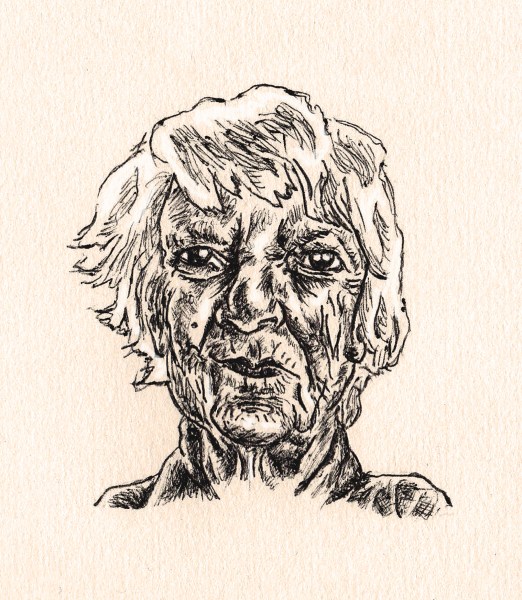
ENCOMIUM – PART 2

My last post detailed a typical visit to a patient named Ted, an eighty-four year old man I saw twice a day for over a year. Ted lived alone in a run-down unit, due for demolition, and had such severe short-term memory loss that within the course of a visit he could tell the same story multiple times. Luckily Ted retained his long-term memories, and, even luckier for me, the stories he told were so interesting it was no burden to hear them repeated.

As nurses we assisted Ted by administering his medications, ensuring he was having something to eat, moisturising his legs, and occasionally dressing any wounds he developed. We also gave the solitary man company, and, uniquely, Ted gave back. Some days it was hard to tell who was accompanying whom.

Ted was a joy. Normally seeing a client this often, particularly one who offers up the same conversation like a meal repeated until you’re sick of the sight of it, would become wearisome, but Ted was so genuinely happy, and so sharing in his happiness, that visiting him felt like recharging. Each rendition he gave of his stories was animated and energetic. His jokes, which after a few months I could mouth along with him, were always delivered with such sincere amusement and enjoyment that it was impossible not to laugh with him.

I was moved from the area where Ted lived and began nursing further north, and my visits with Ted were cut off. It was a different nurse who got to hear about the time his car broke down on a set of train tracks and was hit, with Ted still in the car, by a train. Ted walked away from the accident, went to get a beer at a nearby pub to steady his nerves, and decided the car was probably a wreck, and so hitchhiked his way home. True story. I heard it at least seventy-eight times.

A few months ago I found out Ted was no longer on our books. Ted has chronic obstructive pulmonary disease, which is a fancy way of saying his lungs are shot. He spent his early adulthood chewing on cigars, sucking on cigarettes, and even having the odd puff of a pipe. His later adulthood was spent working in a pottery factory at a time when OH & S didn’t include face masks, and so, even though he had quit smoking, the deterioration of his respiratory system continued with lungful after lungful of ceramic dust. Because of his COPD, Ted was particularly prone to chest infections, which made him particularly prone to hospital admissions. And so the decision was made by his case manager that Ted wasn’t safe to be living alone and a nursing home was arranged. This meant district nurses were no longer required.

The abrupt departure of a patient is an aspect of my job I find disorientating. Let me set the stage: we go into the intimate confines of a person’s home, are welcomed and offered tea. We administer care, which by its nature creates a bond between patient and nurse. We talk as we work, and learn about out patient’s lives and families. Then, as inevitably happens, one day they’re gone.

Sometimes it’s due to death, but more often it’s that they’ve been put into a nursing home. Or gone to live with family. Or are in hospital. The latter is the hardest because they disappear into the hospital system and it’s not until months later that you realise they haven’t returned and are left wondering what happened to them.

District nurses are, at best, a band-aid. We are a temporary fix, and the best we can hope to achieve is to maintain the status quo for a while longer until health deterioration catches up with our patients. Please don’t let this observation cheapen the profession. Those extra few years we buy our clients at home are years of comfort in a familiar environment, but it’s still frustrating to know we are a quick, and non-lasting, solution.

So Ted had disappeared into that world of post-district nursing, but because of where he had lived I still found myself driving past his unit most days. (Despite his absence, the demolition has yet to commence). And each day I was reminded of the man and what an incredible life he had led. I would remember the story of how, on an impulse, he quit his job in New South Wales and travelled to Melbourne with a friend to visit his friend’s aunty. And how, six months later, he married his friend’s aunty. She was twenty years his senior and initially refused to marry him, stating that he could stay until he was bored with her. Ted was outraged at the suggestion that he wouldn’t make an honest woman of her and slept on the couch until their marriage day.

And I remembered how, twenty years on, his wife had a stroke and, mentally, reverted back to an infant. And how Ted fed her, and washed her, and cared for her whilst she called him “Mum,” until the day she died.

An encomium is a tribute, either spoken or in text, to a person and their accomplishments. My previous post set out to capture just a slice of what it was like to know Ted. To immortalise a fraction of a fraction of his life, but one that demonstrated his humour, and his vitality, and his kindness. To protect and praise a man who had done some incredible things but who had been largely forgotten by the community he lived in.

Ted will undoubtedly have no memory of me and the small part I played in his story, but hopefully these posts will preserve my memories of Ted and the part he played in mine.