Raising Roo: Birth Story (Part 2)

I meet the midwife on shift, a friend of our midwife, who explains that Christina had rang ahead and ensured Alex was hustled off the ward and into the birthing suite as soon as possible. I thank her profusely for reducing our apart time, and reflect that, once again, in Austria, it’s all about who you know.

The midwife explains the current options, all of which boil down to different ways of waiting, and Alex goes with the most comfortable sounding: a bath. The suites are fitted with a private bathing room containing a circular tub the size of a spa. The midwife gets the water running, provides some towels and shows us the adjoining bathroom, and then leaves us to it.

Alex disrobes and eases into the water, her tight pregnant belly glistening, and it still doesn’t feel quite real, even here and now, that a baby is ready and waiting inside.

‘Do you want me to get in with you?’ I ask, winking.

‘I don’t know how the midwives would feel about that. They’re used to dealing with naked women, not men.’

I sigh. ‘All the perks go to the pregnant lady.’

‘Damn right.’

We talk, conversation broken regularly every time Alex has to focus on another contraction and I get to practice my encouraging breathing instructions. She says that the warm water is helping, but it feels as if they’re getting stronger. 

I bring out a bluetooth speaker and we listen to George Ezra strum his brand of upbeat pop, Alex soaking in the bath and me on the floor, one hand dangling in the water, waiting for our baby to arrive. 

After an hour, the contractions step up a notch and the discussion and laughter starts to thin out. The pain has increased to the point that she cannot keep talking, cannot keep the thread of conversation. I default back to a string of reassurances but can see their effect lessening with each new spasm. 

At a little before seven, Alex is towelling herself off when Christina arrives. We both soften a little with relief. The hero is here to make everything better. Which, of course, is an unfair expectation as a baby still has to pass through my wife’s genitals and there is little Christina can do to bypass this. Nevertheless, her presence and positivity is a comfort.

Half an hour later and that comfort is dissipating under the ceaseless strain each new contraction is demanding from Alex. She’s hunching now, all efforts directed towards taking long slow breaths through this latest wave of squeezing pain.

‘Any reason they’re coming so fast?’ I ask Christina.

She shakes her head. ‘The body is in charge, and every body is different.’

Christina suggests an examination to get a gauge of where we’re at. Alex lies down on the mattress, once again dressed in an oversized black t-shirt, and I sit at the head of the bed. I hold her hand and give a hopeful squeeze that all her efforts will result in good news. Alex squeezes back, but I think it’s more due to pain than optimism.

‘One centimetre,’ Christina says, and the announcement hits me like a splash of cold water.

I think of all that Alex has given already and multiply that by ten, the magic number before anything can start happening, and feel a heaviness in my gut. I catch her eye and force a bright smile.

‘Progress,’ I say. ‘Only nine more to go.’

She gives a weary grin but the expression is cut short by another contraction.

Once she is breathing normally again, Alex sits up. I’m watching her closely and see the colour drain from her face. She purses her lips and lets out a long stream of breath.

‘I don’t feel so good,’ she says.

‘Do you want to lie back down?’ I ask.

‘No. I want to go to the toilet.’

She stands but pain ripples through her middle and I grab her elbow for support. We shuffle out of the room together, Alex’s weight pulling more at my arm the further we go. 

‘I really need to get to the bathroom,’ she says, a touch of panic in her voice.

‘Almost there.’ I pull open the heavy door and guide her past the round bath and towards the bathroom.

She shambles out of my grip and stumbles against the toilet door, banging it open and dropping to her knees. The sound of retching follows, deep and guttural, the type of heaving that seems determined to scrape away her insides. The contents of Alex’s stomach erupt out of her and continue to do so until she is rung out.

‘I missed the bowl,’ she says in a croaky voice.

I look over her shoulder from where I was rubbing her back and note that the bathroom contains a sink, a bin, and a toilet, and that she had managed to miss all three. I decide not to share this observation.

‘Why don’t you go sit down. I’ll clean this up.’

Alex gives an exhausted nod and pads back towards the bath. I find a cup and fill it with water from the sink and carry it to her, then get to work with some paper towels and disinfectant left on top of the cistern. By the time I’m done, a little colour has returned to my wife’s face, but pain lines have set up camp around her eyes and mouth.

‘Are you okay?’ A pointless question I can’t help but ask.

She shakes her head, the formation of words proving too much.

We get back to the birthing suite and fill Christina in on what she missed, and she suggests we try walking around the ward to ease some of Alex’s discomfort. Alex concedes with a worn-out nod. The three of us venture into the large open space between rooms, Christina on one side and me on the other, with Alex hunched over between us. 

We don’t get far before Alex stops, fingers tight around our arms, trying to breathe through the iron grip of her uterine muscles. Christina and I garland her with praise and encouragement, and try to coax her further, but progress is slow and it’s not long before she is waving us off, silently pleading for a rest while she hunches against a work desk, arms crossed against the smooth surface and head hanging in between. 

The contractions come back-to-back without any respite to allow Alex to catch her breath and detense. I squat beside her, trying to look up into her face.

‘You are doing great, babe. That’s perfect. Long breath in and long breath out.’

I enact my instructions, breathing with her, and she follows along, face scrunching up and cheeks ballooning as she exhales. She opens her eyes and looks so very tired. She has become increasingly non-verbal and it’s making me nervous. My brain feels like a bird flapping up against a cage, wanting to shout out that something is wrong, that my wife is in pain, but everyone is behaving as if it’s normal so I have to believe that it is. I attempt to quiet the manic bird and smile and rub Alex’s back and prompt her to take a step.

We manage to cross the length of the ward, a weird shambling six-legged creature letting out a jarring combination of painful moans and upbeat assertions. Alex is wrecked by the end of this journey. She leans into a sink mounted on the wall and I ask if she is going to be sick again. She only shrugs and sags lower.

Christina spots a physician and excuses herself. We are alone in the hallway and I want to do something to make the situation better but my options have shrunk to cheerleader and backrubber. I have never felt more useless to my wife. She is bearing this physical burden for us and I am repeating the same sentiment I’ve been saying for the past hour. I’m amazed she hasn’t asked me to shut up yet.

Christina returns. ‘The doctor said he’s been watching you and believes you’re ready for an epidural.’

I feel a flush of satisfaction that Alex’s painstaking parade has been good for something.

‘Is that something you’re still wanting?’ Christina asks.

Alex looks up with dark hollows under her eyes and breathes out, ‘Please.’

We start-and-stop our way back to our suite, moving with the tide of her contractions, until Alex finally collapses onto the edge of the bed. I expect to see relief in her face, but sitting hasn’t eased the waves of pain squeezing her body. Her entire focus is committed to enduring.

‘Just a little longer, beautiful, and then they’ll numb you right up. You won’t even know you have a uterus by the time they’re done.’

She gives a fluttering smile at my weak attempt at humour then returns to her ordeal. 

It takes another forty-five minutes of deep breathing and moans trickling from pursed lips before the anaesthesiologist and his resident arrive. I am given blunt instructions to leave the room; COVID restrictions separating us again. My caveman side wants to thump my chest and tell him ‘Make me,’ but I concede after giving Alex one more pep-talk and a kiss to the forehead.

The door slides closed and I stare at the white surface for a while, picturing my wife exposing her back for the needle, before turning to the open ward. 

I stay within a five metre radius of the room, wandering out to my self-imposed limit and then snapping back. I lean against the wall beside the door, and then the door itself, and then stride out again, restless. From my nursing experience, I know the procedure should take around twenty minutes, providing all goes well. At the forty minute mark I feel like a shaken up bottle of soft drink with the lid on tight. I bite back the urge to hammer on the door and demand they let me in. I pace my small circle and wait.

Five minutes later the door slides open and the anaesthesiologist and his resident step out, glancing at me before striding away. I rush the room and find Alex sitting up in bed with her latest accessory — IV pole, pump, and tubing snaking under her shirt — erect beside her. She smiles at me and I breathe again.

‘How are you doing?’ I ask, sitting on the edge of the mattress.

‘Better,’ she says.

‘The contractions?’

‘They tell me they’re still there, but I wouldn’t know it.’

Tension is draining from her features and her shoulders have relaxed. It’s good to hear her voice again.

‘Took them long enough,’ I say.

‘I don’t think the resident knew what she was doing.’

‘Just what you want when someone is shoving a needle into your spine.’

She leans forwards until our foreheads touch and we each exhale. The respite feels well deserved.

With the pain under control, we find ourselves unsure what to do next. The morning has been swallowed in a haze of agony for Alex and a fog of anxiety for me.

‘So, what do you feel like doing?’ I ask.

‘I could eat.’

I laugh and know I have my wife back.

(To be continued…)

Raising Roo: The Cost

Back in pre-baby days when Alex and I were newly-weds talking abstractedly about the concept of growing a human, one of the biggest things that stayed my hand, or in this case, another appendage, was the thought of the cost.

I am a self-confessed introvert (see post ‘Vienna in the time of COVID – Chapter 19‘), which in a nutshell means I like my own company and am content locking myself away for prolonged periods of time, wandering through the words of a book or whittling away at some creative pursuit, such as drawing, crochet, or a blog about parenting. 

Even before beginning the process myself, I was given to understand that, as a parent of an infant, it’s rather frowned upon to just drop sticks and leave in the middle of a diaper change or when your baby won’t stop crying, even though you’ve asked him politely three times to keep it down, because you need a little me-time. In fact, the stark reality is that by volunteering to be the care provider for a helpless, immobile, beginner human, you’re essentially forfeiting me-time for the foreseeable future.

This idea troubled me greatly. At the time, I felt I was performing reasonably well as a husband/brother/son/friend, but knew I was able to give a lot to these relationships because I had the luxury of balancing my community commitments with isolated periods of hermitage and self-indulgence. Granted, my self-indulgence wasn’t anything extravagant, more binge-watching a science-fiction show with a bag of peanut m&ms and long solitary walks with an audiobook than weekends in Dubai and snorting lines of coke off a stripper’s foot (or whichever body part is currently in favour), but these were the activities I needed to keep the Jonathan train chugging along. Without these nuggets thrown into the firebox from time to time, I was concerned the whole locomotive might derail. 

I talked about this with my wife who was sympathetic and supportive, and didn’t just say, ‘Suck it up, buster, and join me in the real world’, which she would have been somewhat justified in saying had she chosen. Even as I talked about it with Alex, and even as I write about it now, I appreciate that this is most definitely a twenty-first century, first-world problem and that historically, and in other countries in our world currently, people are more concerned with earning enough money to feed themselves and their families than with the quantity of me-time they’re allotted.

With this unignorable fact pinging around the back of my head, suck it up is essentially what I did. I wanted to be a father, and I wanted to see what a person that was a milkshake mix of me and Alex would look like, therefore I needed to accept the cost of that decision. 

We were approximately half a year into the COVID lockdown when Alex broached the subject. We had already determined that we would procreate eventually, but knew there were still a few things on our life-before-baby list that we wanted to tick off, such as a trip to Bali with two of our favourite people, Damian and Holly. The trip was originally scheduled for early 2020, but a little something happened that year that got in that way. We naively thought the whole global pandemic thing would blow over in a month and rescheduled the holiday for November of the same year. When we found ourselves still waist deep in virus and November rapidly approaching, we stopped rescheduling, mostly to save ourselves the heartbreak every time our plans got cancelled. Hope may be the thing with feathers, as Emily Dickinson said, but it can also be a bitch.

Alex, normally a lover of plans and the adherence thereto, suggested we ditch the timeline and just jump in the sack together. Technically, she said it a little more eloquently than that, presenting the argument of years lost waiting for the pandemic to subside and the subsequent time spent pursuing those childless-and-free activities we had outlined for ourselves, followed by the time spent trying to get pregnant and our hypothetical ages when we did finally become parents, but it boiled down to the same thing: it was baby-making time. 

Given her persuasive argument, and the undeniable fact that not a lot else was going on, I agreed that, ready or not, we would try and get pregnant. I am not looking forward to the day when I have to explain to Roo that he is just another pandemic baby.

That feeling of the cost still weighed on me, however, mostly that my performance as a father might suffer due to my own inbuilt dependance on bouts of solitude going unmet. In an effort to game the system, I decided that from this point until we saw our little cluster of cells in an ultrasound, I would indulge in my favourite pastimes, thereby storing up a supply of introverted contentment to get me through the lean years. This was not a hard thing to accomplish given COVID meant that not much else was available to me other than lazy activities you can do in your living room. To be honest, by the time the world started opening up again, even this happy little introvert had had more isolation than he could handle.

One other hobby I was looking forward to indulging in was the increased efforts at sparking the candle of life with my wife. We already shared an ease and comfort with each other when it came to amourous activities and this connection only deepened and intensified when we partook knowing it could result in an act of creation. This was unfortunately short-lived as, once all forms of contraception were out of the picture, we had sex a total of two times before conceiving. At least we know we’re fertile.

Alex being pregnant really played into my plans as, not only was she increasingly tired, which further limited our social calendar, she also classified as a vulnerable group, and so our care in avoiding the virus increased tenfold. Our wild weekends, which were tame to begin with, shrank down to afternoon walks along the river, meals at my in-laws, and coffee and cake with friends in the comfort of our living room. By the time amniotic fluid started leaking from my wife, my introverted battery was fully charged.

But the anxiety of the scope of what I was committing to never fully went away, even though my excitement for meeting my offspring was growing exponentially. In retrospect, I suppose it was really the same anxiety every person faces when consigning to be responsible, in body and mind, for a brand new person. The influence such a decision has on your life is monumental, and should be monumental, and the act of bringing to bear what I would no longer have was my way of coming to accept the enormity of what I was devoting myself to: a life-changing experience.

When that moment came, when I saw my son’s face for the first time, his small cries croaking from his tiny perfect mouth, it was indeed a life-changing experience. I know it is cliche to say but I can only report the event honestly as it happened to me: I saw him and knew I would happily pay any cost to be the father of this amazing miracle. He was so little and vulnerable and he only existed because of me, and I accepted the responsibility of caring for him so utterly that to worry about less time rewatching The Office seemed so absurd. 

The scientific thinkers amongst you will no doubt be thinking of the flood of hormones that are programmed to release to invoke these feelings to ensure I don’t get distracted and let my baby be eaten by a crocodile. The psychologically minded amongst you may be contemplating some sort of instant and acute Stockholm Syndrome. Perhaps those with religious tendencies believe I’ve fallen under the sway of a very powerful and very tiny cult leader.

I won’t argue with you. Neurotransmitters most definitely swamped my brain and continue to do so, I fell instantly in love with my captor, and, boy, did I drink the Kool-Aid. But whatever the reason, it doesn’t make it any less true. My free time is almost exclusively devoted to my family and I am more content than I have ever been. What I failed to insert into my equation of effort expended versus time lost to calculate total cost is what I would receive in return. I was focusing on what I would lose and failed to account for what I would gain.

There is no question that parenting is exhausting, and taxing, and requiring of sacrifice, and there have been times in this past year where I have been physically, mentally and emotionally drained. But all I can tell you is that when my son flops down beside me in bed, or smiles up at me when I walk through the door at the end of a work day, or cackles wildly when I blow raspberries on his belly, my battery feels full.

Next week’s topic: Birth Story (Part 1)

2020/21

It is the first morning of 2021 and I am sitting in bed drinking a cup of tea my wife made me and 2020 is done and I feel better for it.

Of course, there’s really no logic to my sense of relief. The period we called 2020 is, after all, just an arbitrarily chosen point in time. Millennia ago, some shaman determined that when the earth was in a particular position in its cycle around the sun, that the year had died, an end-date was formed, and it was deemed appropriate to celebrate the start of something new. The earth didn’t notice, of course, and just continued in its steady circle of the sun, but we living on earth thought it sounded like a good idea and have since continued the tradition of putting a full stop in our collective sentence every time the earth finds its way back to that same spot adjacent to the sun. It is random, arbitrary, and nothing really differs from 11:59, December 31st, 2020, to 00:00, January 1st, 2021. But it does help give us a sense of closure.

And, damn, but do we deserve a fictional but comforting sense of closure. The events of 2020 were anything but fictional, they were, in fact, painfully real. I won’t rehash them because we all know what they were, we all lived through them. We all watched the world close down, all read the countless news reports, watched the graphs and tallies as the number of cases grew, all closed our doors and settled in for the long wait, all obtained masks, and developed an intimate relationship with our sweatpants. 

You know what I’m talking about because you lived through it too. And it doesn’t matter if you’re reading this in a backyard in Melbourne, or an apartment in Vienna, or in bed in Beijing, because you went through it too. And as awful as the implications of that are, that this virus and its society-stopping impact managed to circumvent the world with frighteningly apparent ease, isn’t it remarkable that this goddamn year and all its weird and new and awful moments was a universally experienced phenomenon. 

I didn’t see my family this year. That is to say, I didn’t see them physically. For a full twelve months, for the entire rotation of the earth around the sun from an arbitrarily chosen point and back again, I was removed from the people who raised me. This has never happened before. I hope it never happens again. But, like the rest of the world, I adapted. I found creative ways to engage with my loved ones through digital means. I participated in video call parties, broke out of virtual escape rooms, and sat in my pyjamas at two in the morning, raising a glass of whiskey to my grandpa while attending his streamed funeral. 

It wasn’t the same, of course. Nothing can replicate the feel and warmth and comfort of a long tight hug. But it was something. It was still connection, and conversation, and laughter, and life shared, and while it’s easy to wish none of this had ever happened, instead I choose to be grateful that this all happened at a time when I could open a metal book, click a button, and see my family’s faces smiling back at me through pixels so small so as not to be seen. 

You know what I’m talking about because you lived through it too.

To say it was an emotional year is an understatement. I felt emotions I didn’t know could be felt. The casual boredom and anxiety of a lockdown. The quiet exhilaration of completing a workday in pyjamas. The eerie sensation of stepping onto a train platform and seeing only masked faces looking back at you. But the primary emotion I felt this year was frustration. 

I felt frustrated by the limitations of lockdown. I felt frustrated when an overwrought network failed and a call to my family froze. I felt frustrated trying to take a work call while my wife tried to take one too from half a metre away in our cobbled together home-office. I felt frustrated looking at the same four walls day in and day out. I felt frustrated every time I saw a nose poking over the top of someone’s mask. I felt frustrated every time I forgot to unmute myself. And I felt overwhelmingly frustrated every time there was news reports of people having parties in the middle of a lockdown, of people who knew they were infected but thought it was okay to pop into the shops, of morons claiming that wearing a piece of protective clothing was somehow impinging of their personal freedoms, of selfishness, and borders closing, and death tolls rising, and flights cancelled, and that day when I could return to my family stretching further and further into the future until it seemed to disappear over the horizon line altogether. 

I felt frustrated with a society I thought was better than this.

You know what I’m talking about because you lived through it too.

But focusing on this frustration is a choice, and a bad one. And that was something else I had to learn to adapt to in 2020, choosing where to direct my attention in a way that best served me. It was so easy to get sucked into the endless feed of headlines and the addictive horror that was the virus and its effects, and to believe the world was ending. But it wasn’t ending, only changing, and there are good parts to change if you look for them.

2020 was the year of the virus, but it was also the year I got to spend every day with my wife and best friend. Rather than break us, being confined together taught us new ways to spend time together and new ways to give each other space. It made me more grateful than ever that I found a partner who I can literally spend every minute of my life with and still want more. 

2020 was the year of the virus, but it was also the year I didn’t have to commute to work anymore and so had time to exercise. I started slow, and with short distances, but then ran longer, and faster. I ran in sweltering summer heat and pitch black winter evenings. I got fitter and felt better inside my own bones. 

2020 was the year of the virus, but it was also the year we all got crafty. We baked sourdoughs, and banana breads, and all the comfort food we needed to get through the long days. We picked up knitting needles, pencils, paintbrushes, and tools, and we made things. We took photographs and made videos, and wrote things, and read things. We found new hobbies and new ways to enjoy our time. 

And you know exactly what I’m talking about because you lived through it too.

I know nothing really differs from 11:59, December 31st, 2020, to 00:00, January 1st, 2021. I know it’s all arbitrary. But, dammit, I am still hopeful for this coming allotment of time. Not because some past shaman was right and something has died only for something new to be born, and not because the slate magically becomes clean just because we add an extra digit to the end of the calendar, but because in these last twelve months we have all adapted. We have been through an ordeal and we have learnt from it.

My hope is that we will take the collective lessons into the new year, the major groundbreaking discoveries and the intimate personal revelations. My hope is that 2021 is the year the vaccine works and we contain the virus. My hope is that 2021 is the year I get to hug my family again. But whatever 2021 brings, my hope is that I continue to grow and adapt and find new ways to connect and enjoy my time. 

And I am comforted by the knowledge that you will know what I’m talking about because you will be there, living through it too.

Vienna in the time of COVID – Chapter 27

Today marks the end of the sixth week that I have been writing this blog series. Six weeks! That is six weeks of spending 23 and a half hours a day inside my apartment, six weeks of having physical contact with only my wife, six weeks of sweatpants, and trips to the supermarket that feel like heists, and yoga in the morning, and working from my dining table, and social isolation. 

Only it hasn’t felt overtly isolating. Some of that is because we live in the future where I can literally talk to my magic handheld computer and instruct it to let me view and speak to my brother and it does! But another big part is because of this, what you’re reading right now, these words, this act of writing. 

Because, while technology is definitely an act of magic and I’m sure my laptop is just full of tiny wizards making it all work, there is an older magic at play here. Writing is magic and reading is magic. I sit here alone in my room in Vienna and put down a string of words to represent a ridiculous thought I’ve had, maybe about how Austrians like to scream “meal time!” at each other, or how an old tortilla will do if you’re out of toilet paper, or how my wife wants to stab people with a fork from time to time, and I express these images through a series of squiggles, and then you in your home maybe a thousand miles away from mine open up a page and decipher these squiggles until you too are picturing screaming Austrians, or sanitary tortillas, or a fork-wielding Alex. We have communicated, from my mind to yours. Magic.

Writing this blog and having this magical communication has helped me tremendously during this surreal and abstract, and any other art movement that applies (expressionist?), time. I have been able to funnel my anxiety and nervous energy, my questions and thoughts and actions and stupid jokes into this medium, and by doing so get them out of my head where they can breathe a little, see the sun a little, and not feel all pent up inside my skull where they would endlessly bounce around (much as I image kids are doing during this quarantine. Those poor, poor parents). 

Writing is a crystallising process. Putting words down forces me to reach into the fog of fragmented thoughts and hazy half ideas and decide how I really think and feel about a thing, to put it into a sentence that I can read back on and think “Oh yeah, that’s how it is”. And because I have formed it into a single clear statement, it’s as if I have permission to stop chewing over it, to let it go, to know it’s there if I need it, in black and white, and move on feeling a little lighter because of it. Magic.

As I have been doing this process for the past six weeks, the good/bad news (depending on if you’ve enjoyed these blogs or not, and if not, nobody made you keep reading them, that’s on you, friend) is that I have nothing left to say. All current concerns and questions, quibbles and queries about life in the time of COVID have been expunged onto the page and shared and communicated with you lovely people. The brain tank is currently clean and empty, and ready to be refilled. 

To all those who have read along, my deepest thanks goes out to you for taking this time to be with me, to communicate with me, for keeping me company and removing some of the isolation from my social isolation. These have been and continue to be strange times, but I am incredibly proud of how we as a community are getting through it together even while being forced to remain apart. That is another kind of magic.

I am sure there is more weirdness to come, more challenges and more adaptation, and so I’m sure it won’t be long until new perspectives and observations and silly jokes begin circling in my head, needing to be written down and shared with all of you. As such, this is not goodbye, instead let me just say, as is said in German, auf Wiedersehen (literal translation = on seeing again. I told you that language was literal!).

Until next time.

IMG-20200424-WA0001

Vienna in the time of COVID – Chapter 26

With the days warming up over here, Summer is knocking on the back door, waiting to get in, which means all Europeans’ minds are turning towards one thing: the holidays. While things are improving in Austria in regards to the COVID restrictions — shops are reopening with strict guidelines in place regarding masks and the number of customers allowed inside at one time (it’s progress!) — the idea of being able to go on the usual beach holiday is still pretty much out of the question. As a consolation prize, the Austrian government has announced that travel to Germany and the Czech Republic may be allowed, but given that these locations are basically cookie cutter countries to Austria, at least in terms of topography and landscape, this is not proving to be a particularly exciting prospect for many Austrians. I imagine it’s a bit akin to booking an AirBnB only to find out it’s your neighbour’s house. It’d be interesting for a day, and for sure you’d snoop through their stuff for a while, but then you’re just staring at the same scenery from a slightly different perspective. 

More and more this holiday season, it’s looking like any vacation will have to be of the internal variety. But maybe, with a bit of imagination, it’s still possible to replicate the travel experience from the comfort of your own home. Let’s see what we’re working with:

THE JOURNEY

In order to truly capture the thrill of the flight, my first suggestion would be to find the most uncomfortable chair in your house, the one you keep in the basement or shed and every time you look at it you think “I should really throw that out” before closing the door and leaving it there forever. Set this chair up facing a wall or directly behind where your partner is sitting; the key component is to ensure there is only so much space between yourself and the object/person in front of you that your legs remain constantly bent at a 45 degree angle. 

For the next twenty-four hours, give yourself that real jetsetter experience by remaining in the chair at all times and doing nothing but eating reheated food and watching a collection of movies that never really interested you before, but will do to pass the time. 

For additional authenticity, every time you get up to go to the bathroom, spin yourself around a few times. This will ensure you get that genuine dizzy and slightly disoriented feeling whenever you’re sitting on the toilet. Bonus points for anyone who props up a mirror on the back of their toilet door so they can watch themselves as they do their business and consider how terrible they look. 

IMG_20180628_113530

THE BEACH HOLIDAY

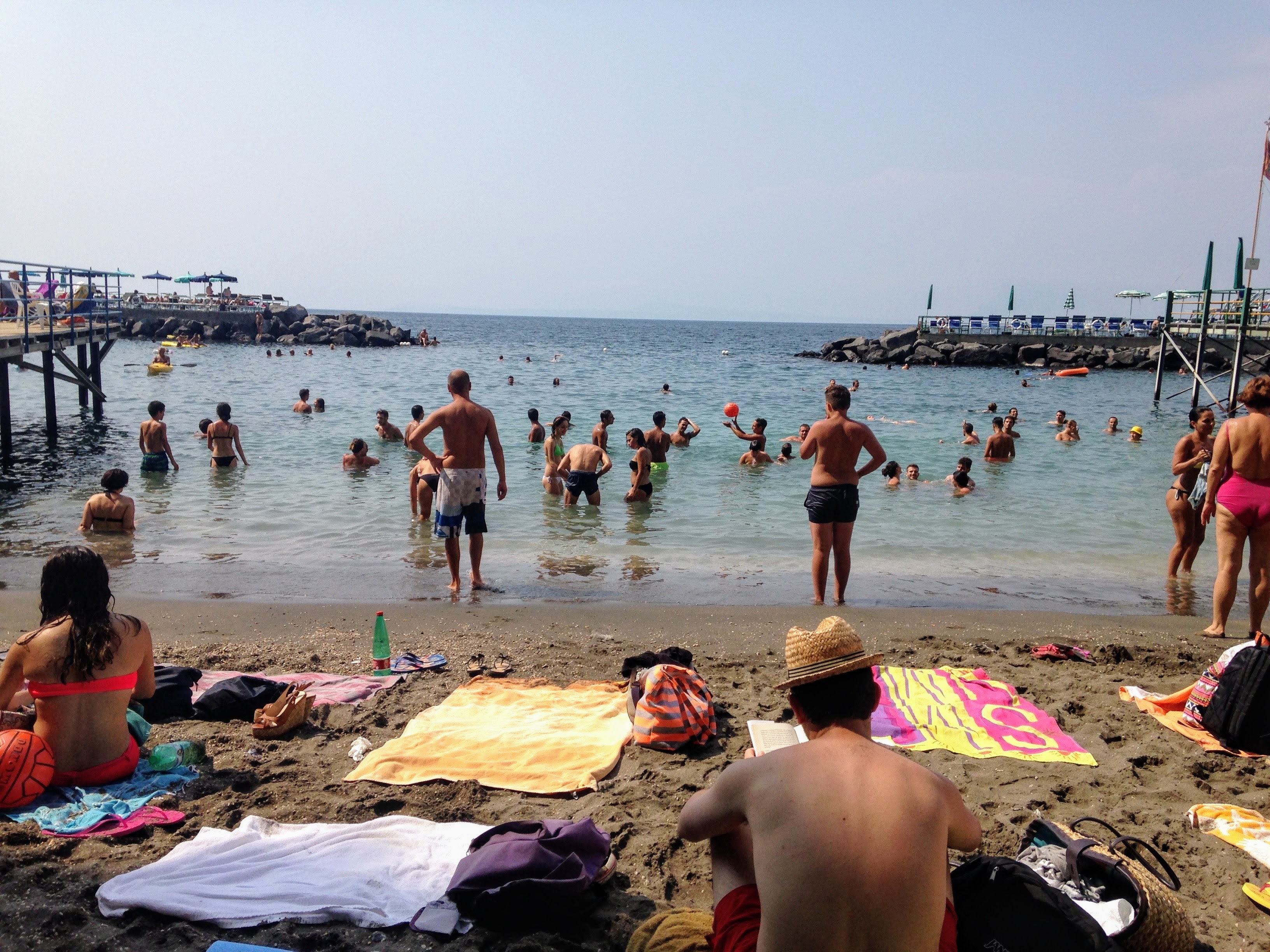
As a landlocked country, the beach getaway is an important pilgrimage for the Austrian people, and while there’s no replacing the real deal, it is possible to create a poor facsimile of the real deal. Begin by coating the floor of your bathroom with fine-grained white sand, the type that feels soft and warm beneath the soles of your feet and pressing up between your toes. If your access to sand is limited, cat litter is readily available at most supermarkets.

Set up an electric heater in the room to simulate the tropical warmth you are used to finding at the beach. A tan is essential to ensure you look and feel the part, so sit as close as you can tolerate to the heater until you can feel your skin literally baking. When it is the colour of a freshly cooked spit roast pig, you’ll know you’re ready to strut your stuff.

Next, fill the bathtub with lukewarm to cold water and tip in as much salt as is available in your home. You’ll want enough to ensure that the fashionable second degree burn you have just acquired will sear upon contact with the water and that you will emerge with eyes as red as your skin. For additional authenticity, throw in strips of the slightly sludgy lettuce you forgot was in your crisper, as well as any old plastic bottles or bandaids you have in the trash.

IMG_0811

THE WILDERNESS GETAWAY

For many of us, a holiday is all about communing with nature. This experience can be replicated in the home with just a little effort. Begin by surrounding yourself with any and all house plants that you may own and try sparking up a conversation. Congratulations, you are now communing with nature. If you continue to the point that the plants begin to talk back, you have gone too far.  

Exposure to wildlife is also a big part of a wilderness getaway. Alex and I have taken up the pastime of attempting to lure the local cats up onto our balcony or in through the front door. While your neighbours may view this as the kidnapping of their beloved pets, you’ll know you are just doing your part to love and support the native fauna. If you start seeing “missing pet” signs being hung around your apartment block, you have gone too far.

A picnic on the bed is a great way to enjoy some rustic eating. Buy some bread and dips, some cheese and meat, be sure to remove any cats you may have trapped in the bedroom, and tuck into some wholesome food. If you can’t remember the last time you ate anywhere except the bed and wake up with salami slices stuck to your skin and ants in the bedding, you have gone too far.

IMG_1649

Those essential elements to a vacation are obtainable with a little out-of-the-box thinking, at least enough to fool that internal travel bug long enough until the world is once again open for business. And if all that fails, pop up any and all of your travel shots as a slideshow on your television, sit as close as possible, and get drunk off home-made cocktails. Before too long, you’ll forget where you are entirely and fall asleep to views of the beach. Just like on a real holiday.

Tomorrow: Writing.

P.S. For a, possibly, more enjoyable virtual vacation, check out Sir David Attenborough’s interactive tour of Australia’s Great Barrier Reef: http://attenboroughsreef.com/